Roofing Questions From Tampa Bay Homeowners
Short answers first. Where a question needs more than a paragraph, the link goes to the page that covers it properly.
Calling about your roof
What should I say when I call?
Start with the street address or ZIP, then what you’re seeing and whether water is coming in right now. If you know the roof’s age or type, or you’ve already opened an insurance claim, say so. Those few facts decide whether it needs a tarp first, a repair visit or a replacement conversation.
Can I get a price over the phone?
Not a real one. A roofer needs to see the roof, measure it and usually look in the attic before putting a number in writing. Anything quoted sight unseen is a guess, and the decking alone can move a re-roof price a lot once the old shingles come off. You’ll have the written price before any work starts.
Is my ZIP code covered?
We work across Tampa and the rest of Hillsborough County, plus 33811 in south Lakeland and 33860 in Mulberry. Don’t see your ZIP on the areas page? Call anyway and we’ll check your address.
Leaks and damage
Water is dripping from the ceiling. What do I do first?
Protect what’s under it, take photos before anything gets moved or covered, and call. Stay off the roof, wet or dry.
There’s a ceiling stain but the attic looks dry. Is it the roof?
It can be the roof, or something in the attic like a sweating AC duct. Your roofer checks the roof, the flashing and the attic on the visit and tells you where the water is coming from.
How do I know if the storm damaged my roof?
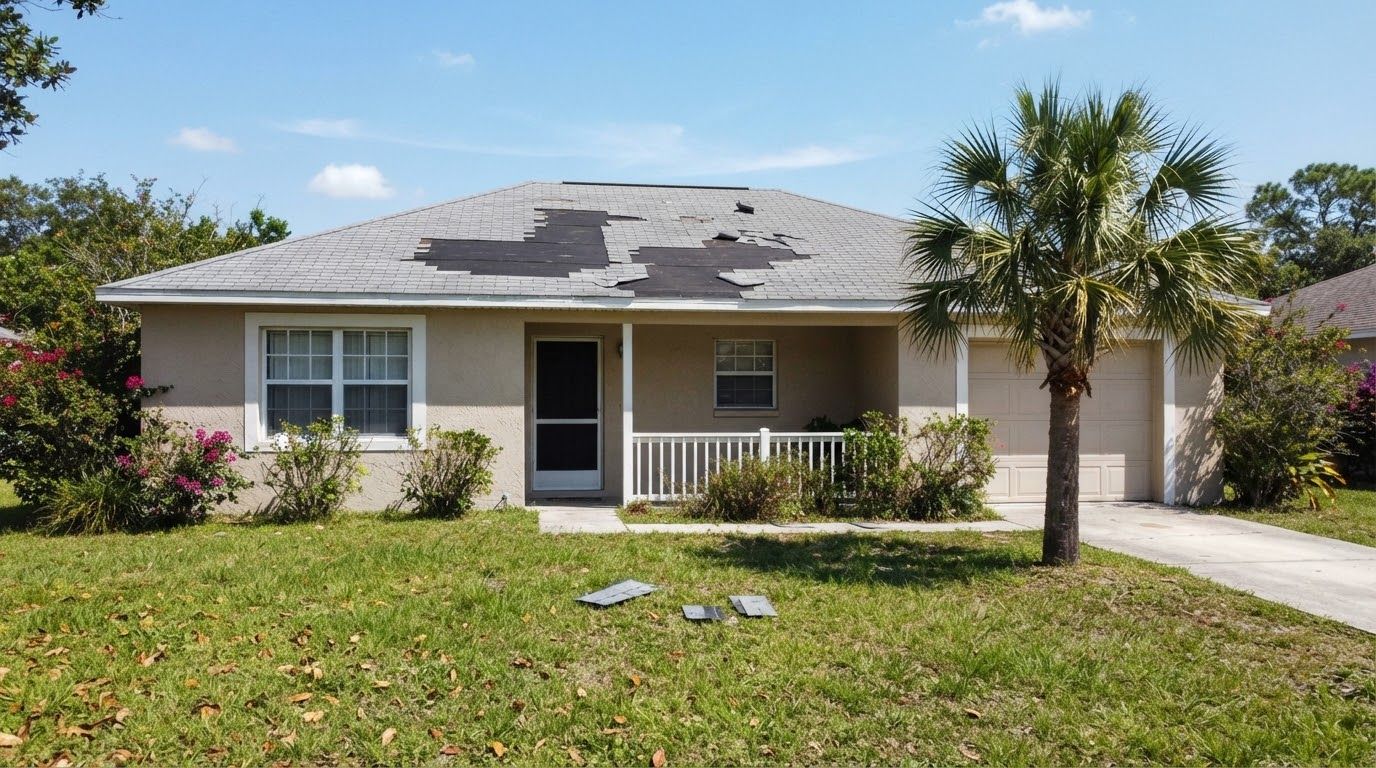
Missing or lifted shingles, slipped tiles and roof debris in the yard are the usual signs. Call and your roofer puts what the storm did in a written report with photos and measurements, which is what an adjuster will want.
Are the black streaks on my roof a problem?
Usually they’re algae, which stains but doesn’t eat the roof. It cleans off with a low-pressure wash. A pressure washer strips granules and does more harm than the streaks.
Insurance and roof age
Can my insurer drop me because the roof is old?
Not for roof age alone if the roof is under 15 years old. Past that, an inspection showing at least five years of useful life left also keeps age alone from being the reason.
How long do I have to file a roof claim in Florida?
One year from the date of loss for a new or reopened claim, and 18 months for a supplemental claim, under Florida law.
Why was my first claim check so much less than the roof costs?
Policies that pay replacement cost often pay the depreciated amount first and release the rest after the work is done. Your deductible also comes off the top.
Permits, licenses and the price
Who handles the permit for my roof?
Your roofer pulls it and books the inspections. The office that issues it depends on the address: many “Tampa” addresses are in unincorporated Hillsborough County, and Plant City, Lakeland and Mulberry run their own offices inside city limits.
Are the roofers licensed and insured?
Yes. When you call, we get a licensed, insured roofing contractor out to your house, one who works your part of the county.
Will I know the price before work starts?
Yes. You’ll have a written price before any work starts, and you only pay for work you agreed to.
The words on a roofing quote
What is a “square” on a roofing quote?
A square is 100 square feet of roof surface. Roofers measure and price roofs in squares, so a 25-square roof has about 2,500 square feet of roof, which is more than the floor area of a one-story house because of the pitch and overhangs.
What do tear-off, decking and underlayment mean?
Tear-off is removing the old roof down to the wood. Decking is that wood, the plywood or boards the roof is nailed to. Underlayment is the layer between the decking and the shingles or tile that keeps water out if the covering lets some through.
What are flashing and drip edge?
Flashing is the metal (or membrane) that seals the roof where it meets walls, chimneys, skylights and valleys, which is where a lot of leaks start. Drip edge is the metal strip along the roof’s edges that directs water into the gutter and protects the edge of the decking.