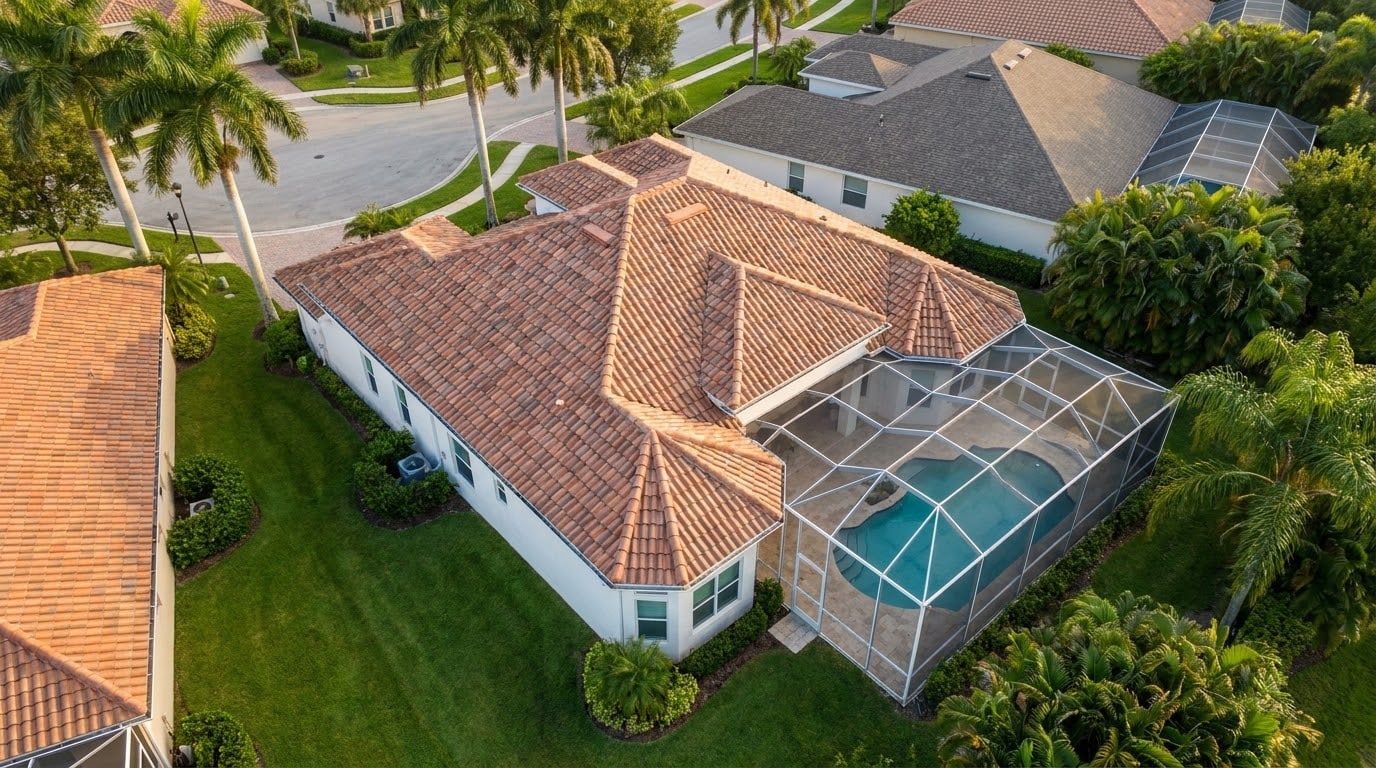
Valrico houses and manufactured homes are different roof jobs
Most Valrico homes are owner-occupied detached houses that went up between 1980 and 2009. Manufactured homes make up a much bigger share here than in the county as a whole, and their roofs start from a different place. Re-roofs, repairs and storm damage on either kind of home are work for a licensed, insured roofer. Call Roofing Services Tampa, tell us which one you have, and we’ll line up the visit. Valrico is unincorporated Hillsborough County, so the County permits the work.
Manufactured home roofs: what helps us most on the call
A few details let your roofer show up ready for the job:
- That it’s a manufactured home, and the year it was made if you know it.
- What’s on top now. The original roof, a metal roof-over, shingles or a coating. The fix depends on it.
- Any add-on with its own roof, like a screened porch, carport or added room, and where it joins the home.
- Where the water shows up inside, and roughly when you first saw it.
Is a 1980s, 1990s or 2000s Valrico roof due?
It depends on which decade the house belongs to.
1980s and 1990s houses have most likely been re-roofed by now, so the date of the current roof is what counts. A re-roof done before the 2007 code is still covered by the 25% rule, and the next re-roof on a house permitted before the Florida Building Code means deck re-nailing and a secondary water barrier (re-roof upgrades for older houses).
2000s houses are the group to watch now. An original roof from those years is 17 to 26 years old in 2026, past the 15-year line in Florida’s roof-age law. Beyond it, an insurer can’t refuse to renew on age alone if an inspection finds five or more years of life remaining, and how roof certification works covers the forms. Call us and we’ll get that inspection on the calendar.
Houses from before 1980: go by the most recent roof permit, not the build year.
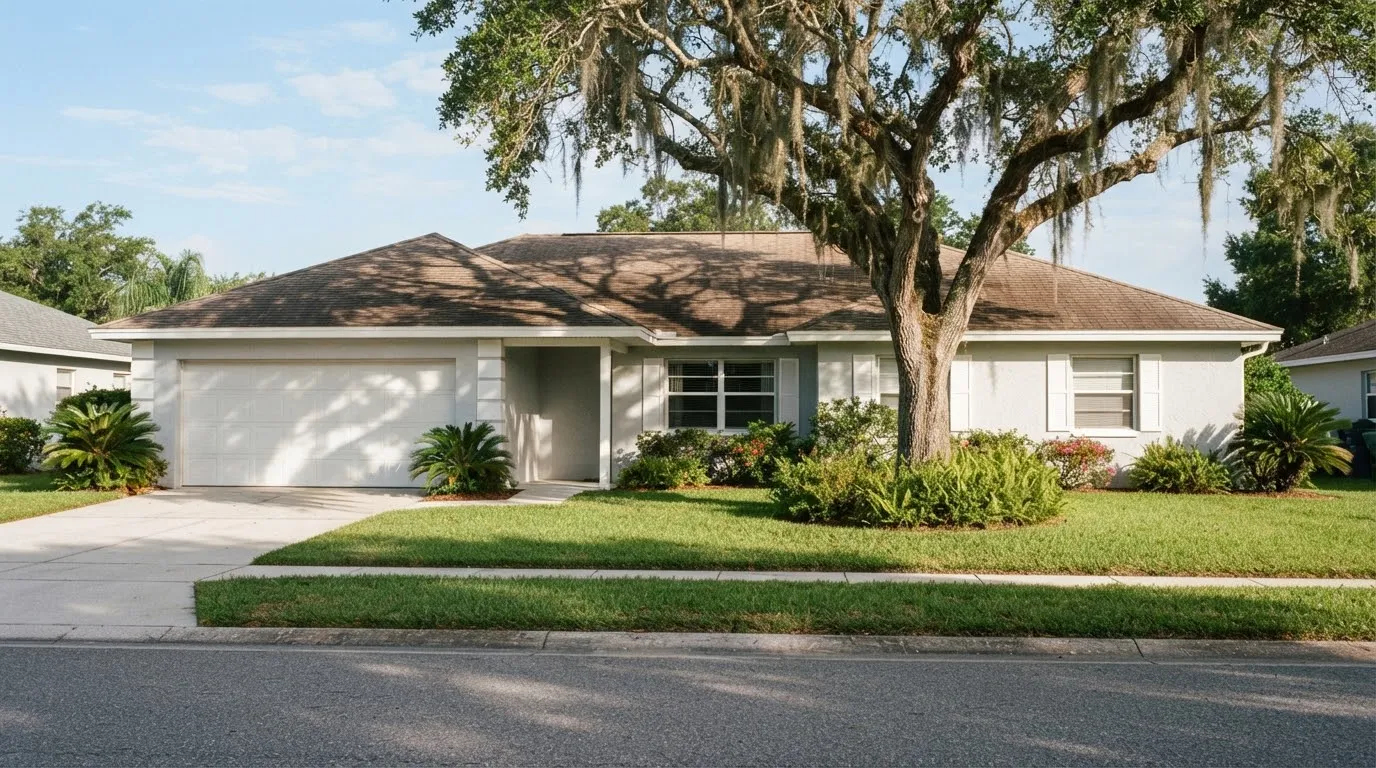 In Valrico, the date on the current roof matters more than the year the house went up.
Storm calls after a night like Milton
After a hurricane or a hard summer storm, look the roof over from the ground for:
- shingles, ridge caps or pieces of flashing in the yard
- tabs that look lifted, creased or missing from a slope
- metal bent back at the chimney, vents or roof-to-wall joints
- a new ceiling stain, or a damp smell in a closet or near the attic hatch
Stay off the roof itself; without safety gear the fall risk is too high. Photograph what you find before anything gets covered or patched, then call us and we’ll get a licensed roofer up there. Storm damage roof repair shows what wind damage looks like close up.
Hail is a summer roof call too
Not every storm call follows a hurricane. A big share of central Florida hail comes down an inch or larger, mostly from May through July, and about an inch is where asphalt shingles start taking real damage. After a summer hailstorm, your roofer checks the shingles for cracks and punctures, because loose granules alone don’t prove hail damage.