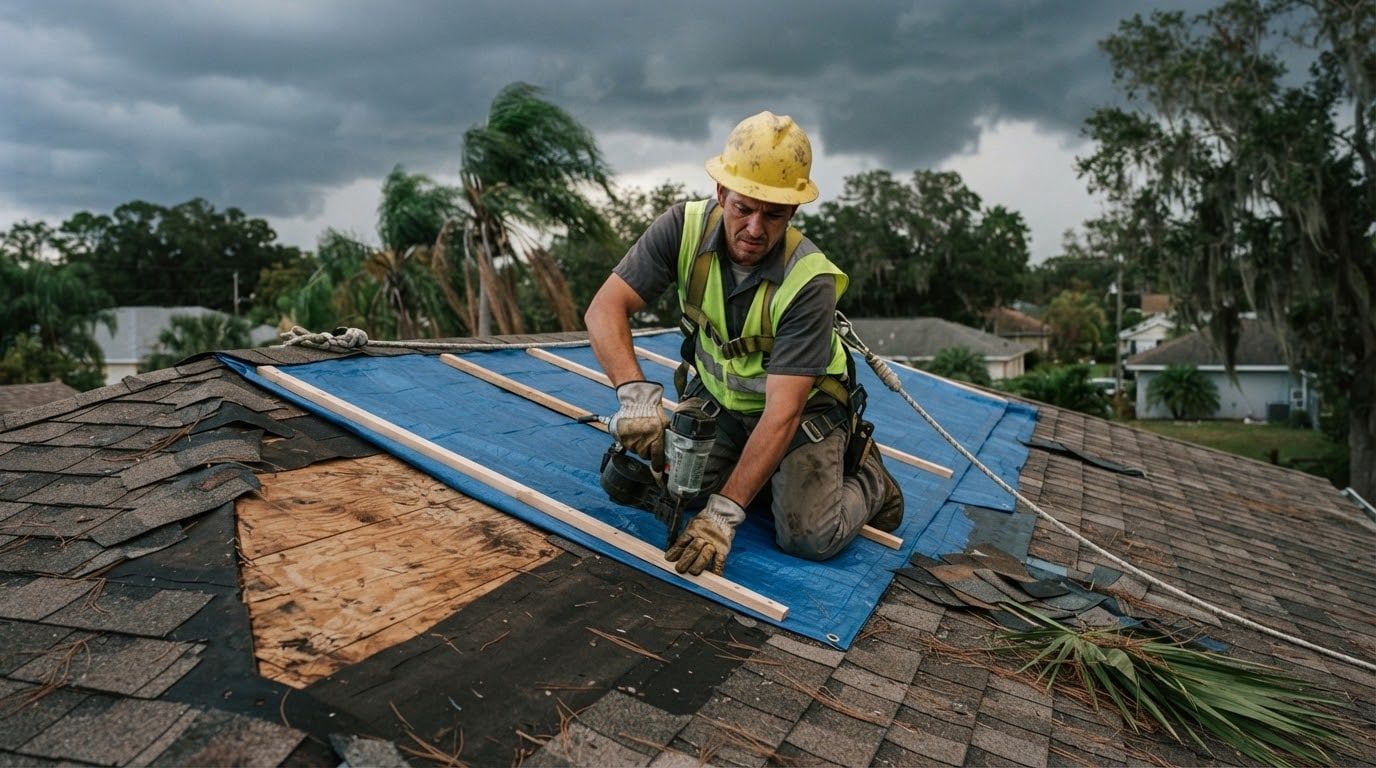
Water coming through the ceiling right now
Emergency roof repair in Tampa and the rest of Hillsborough County comes in two parts: a temporary cover that stops the rain, and the permanent repair once the weather clears. Roofing Services Tampa handles both. Call while the water is still coming in, and we’ll get a licensed, insured roofer out to tarp the damaged section first.
While you wait, keep the damage inside the house as small as you can:
- Put a bucket or a trash can under the drip, with a towel under it for the splash.
- If the drywall is bulging with water, poke a small hole at the lowest point with a screwdriver, so it drains into the bucket in one spot instead of spreading until a whole section of ceiling lets go.
- Move electronics, rugs, paperwork and anything else you’d hate to lose out of the room.
- If water is running near a light, a ceiling fan or an outlet, switch that circuit off at the breaker if the panel is dry and you can reach it without standing in water. If you can’t, close the room off and keep everyone out.
- Stay off the roof, and off any ladder in the rain.
- Then call us and say water is coming in now, so the tarp comes first.
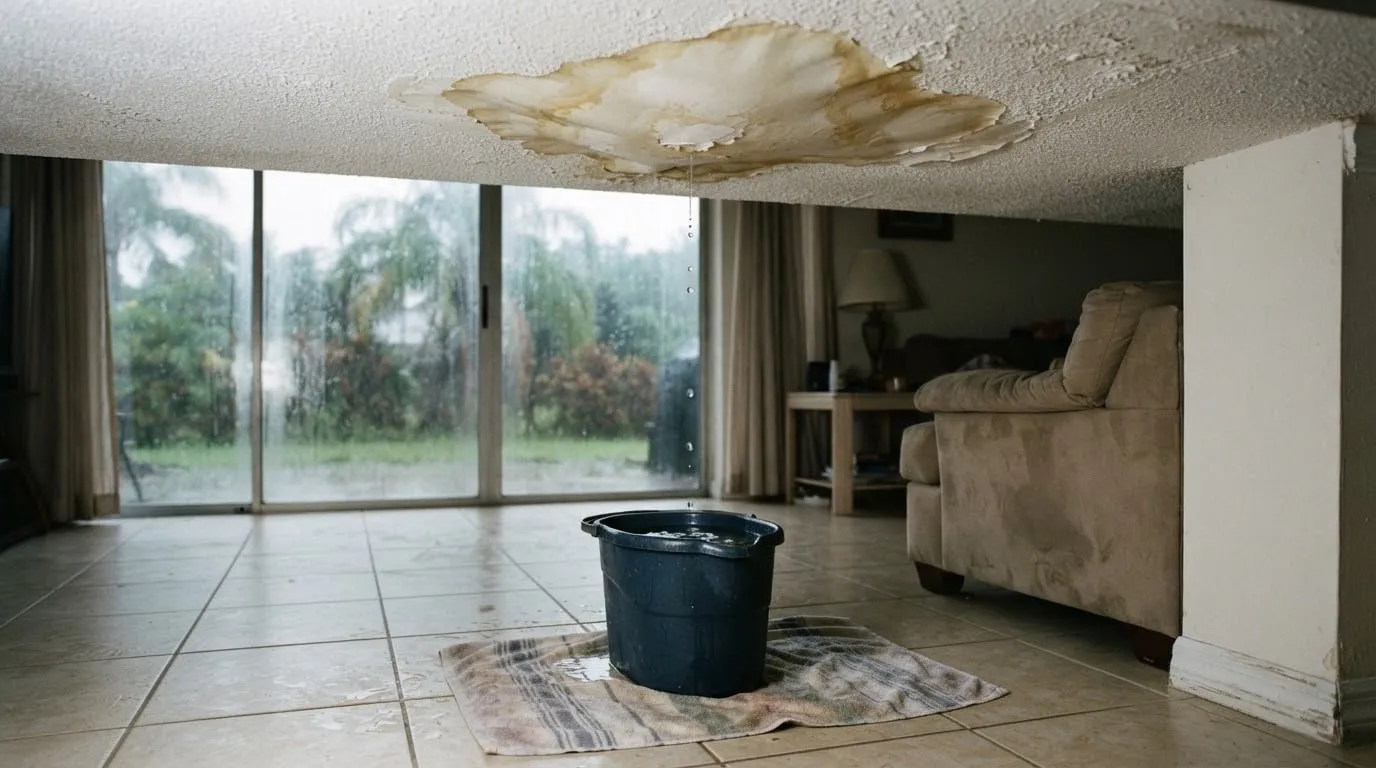 Once a ceiling stain starts to drip, get a bucket under it.
Why the tarp is a roofer’s job, not yours
NRCA, the national roofing contractors’ association, tells homeowners to look at a damaged roof only from the ground. The fall risk is too high without the safety systems roofers use. OSHA requires fall protection for the workers who do go up after a storm, and its hurricane guidance flags wet tarps as a slip hazard. Soft decking you can’t see (the plywood or OSB the shingles are nailed to), a ladder on wet ground and fading light make it worse.
Tile roofs are harder still. Eagle Roofing, a concrete tile manufacturer, warns that foot traffic can crack or break tiles, so a trip up there can add broken tile to the leak you already had.
From the yard, stand back far enough to see each slope and note what’s missing: shingles, tiles, a hole, a limb, a tarp that’s already pulled loose. That’s what to tell us when you call.
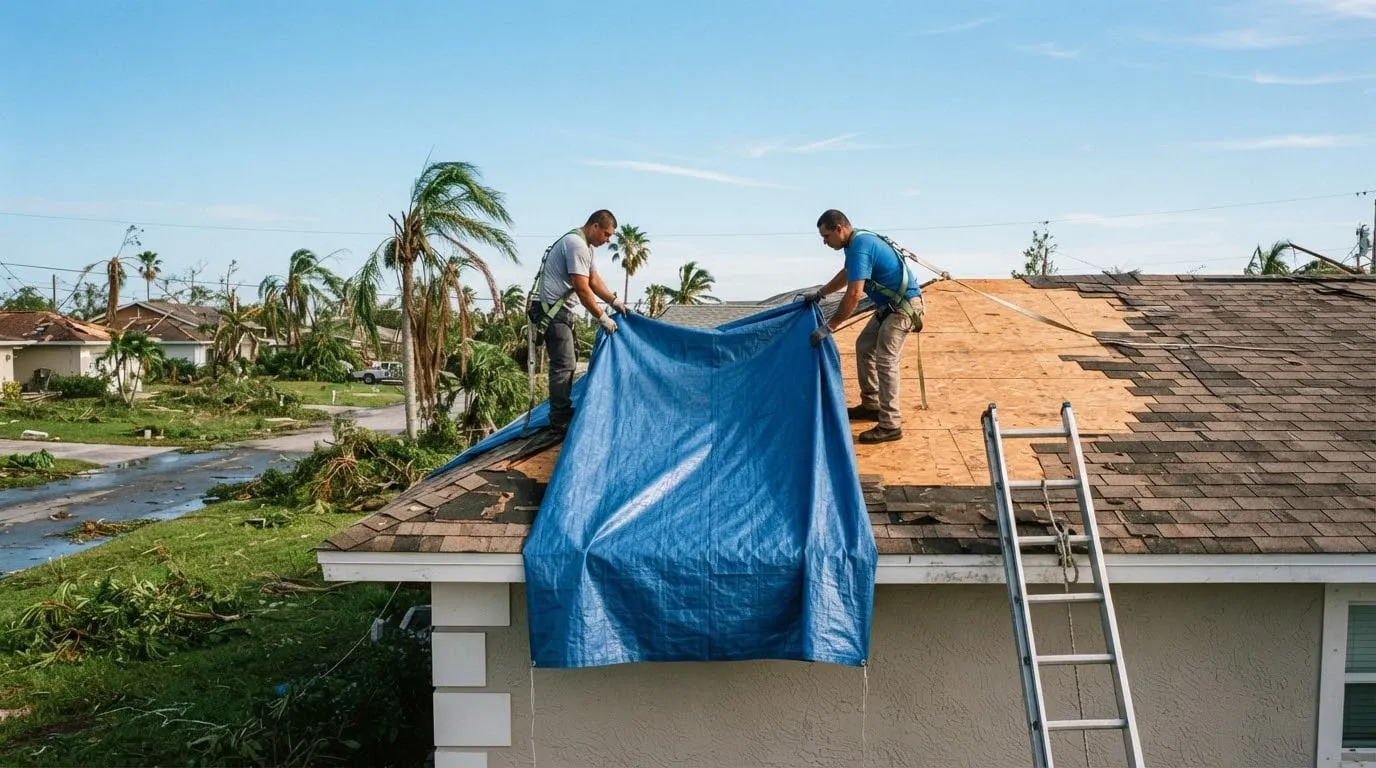 A tarp goes on with the roofer tied off to a safety line, one more reason to stay off a wet roof yourself.
What the emergency visit leaves you with
On most leaks, the emergency repair is heavy sheeting fastened over the damaged area so water runs off the roof instead of into it. You’ll have the price for it in writing before it goes on, and when it’s done you should have:
- photos of the damage before it was covered and of the tarp afterward
- a written note of what was covered, with what, and that the work is temporary
- notes on what the permanent repair will have to deal with, such as soft decking, broken tile or torn flashing
Those photos and notes also cover you if you’re reporting the damage on your policy; roof insurance claims explains the reporting deadline.
Tarp now, permanent repair once it dries
A lasting repair needs a dry deck, so the tarp and the permanent fix are two jobs, priced separately. The tarp buys time; it doesn’t replace the repair, and the longer it sits the more chances wind has to work it loose. Once the roof dries, your roofer opens up the damaged area, replaces what the water got to and closes it up properly. After a named storm, storm damage roof repair covers how wind and hail damage get written up.
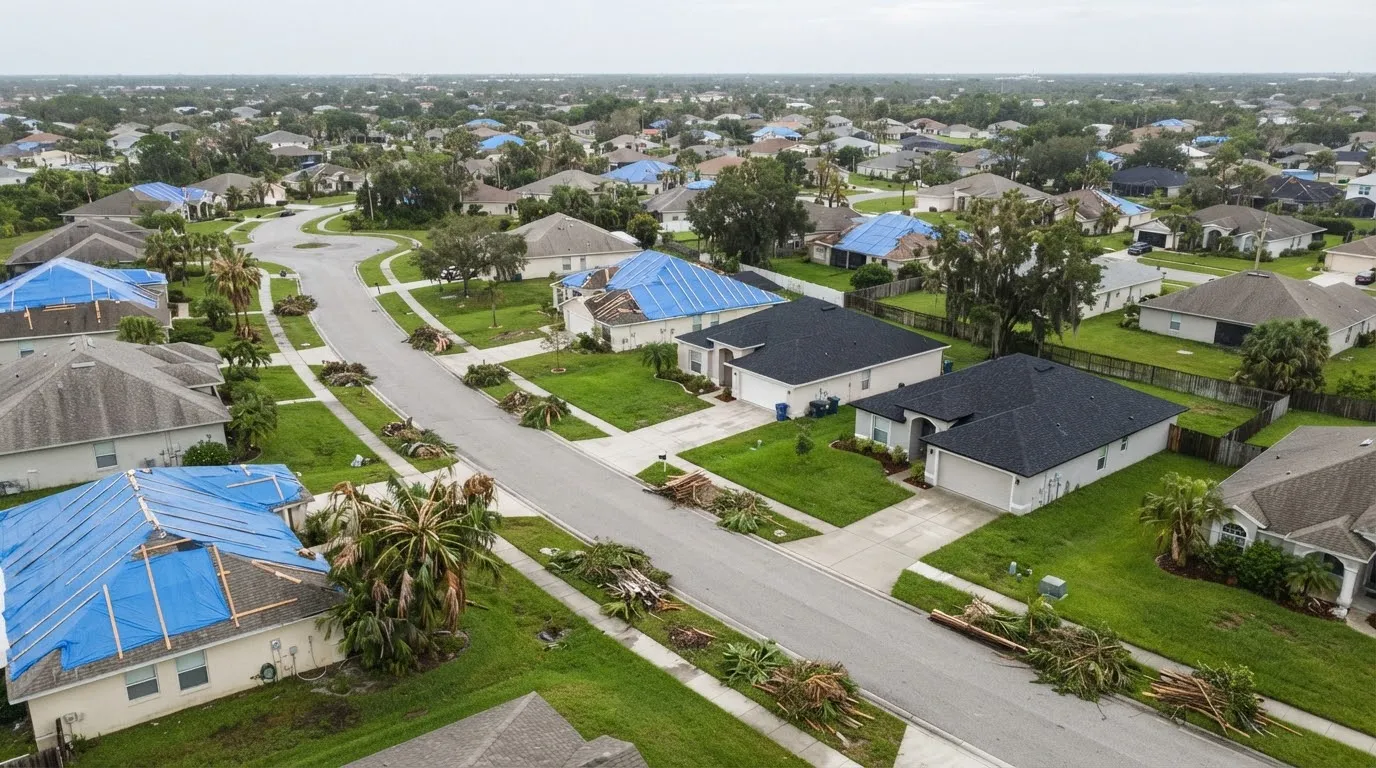 Tarps buy time after a storm; the permanent repair follows once the deck dries out.
Can it wait until morning?
Some leaks can’t. Call now and say so if:
- water is reaching lights, outlets or the electrical panel
- the ceiling is sagging, cracking or has already come down in one spot
- you can see sky through the attic decking
- part of the roof looks sunken from the yard (why a roof sags)
A slow drip into a bucket, with the ceiling holding and the wiring dry, still needs a roofer, but nobody should climb anything during lightning to stop it. Call anyway, and the tarp goes on in the first dry window.
A stain that appears on a hot, dry day still gets a look. In Tampa houses with the air handler and ductwork in the attic, your roofer checks up there as well as on the roof, and ceiling stains with no rain covers what that check finds.