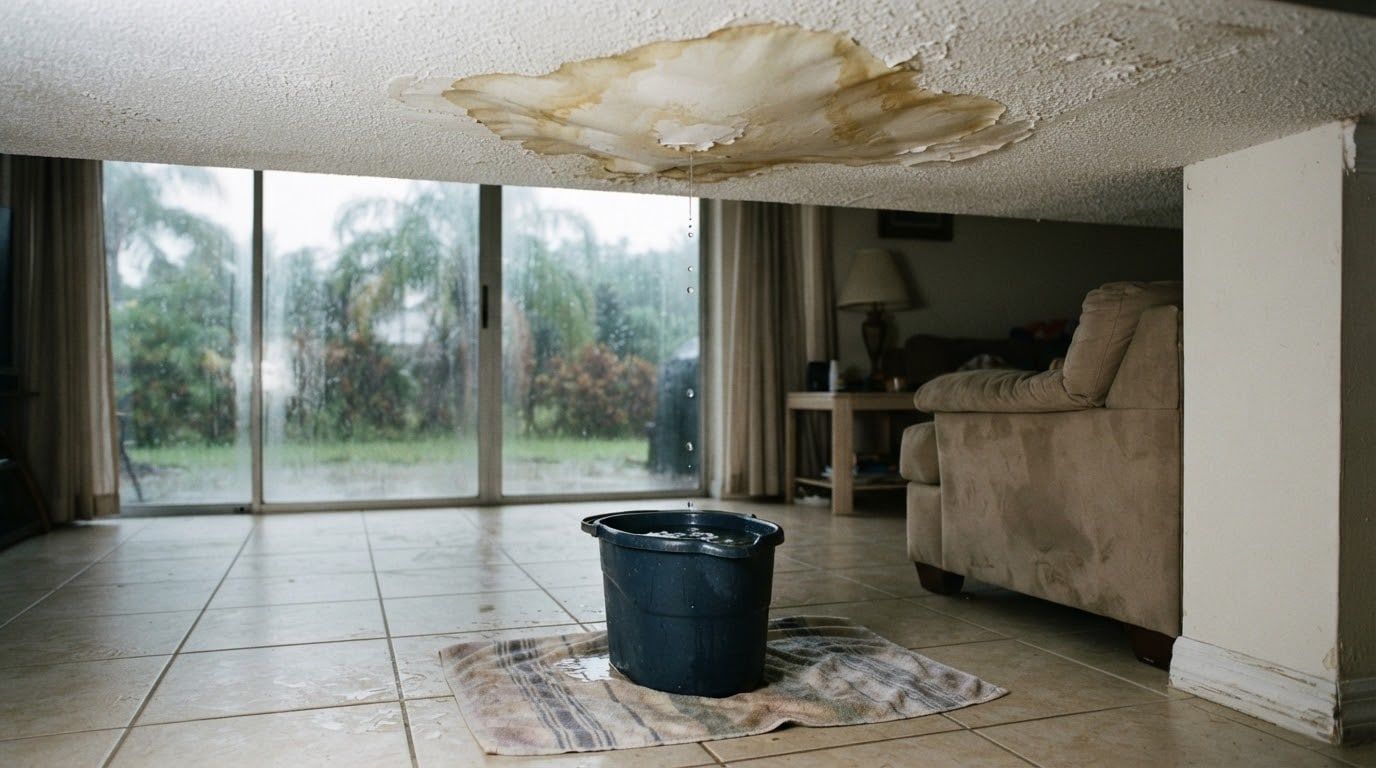
Why there’s a stain when the attic looks dry
A water stain on the ceiling with no leak showing in the attic usually comes from one of a few places. Some roof leaks only open when rain comes in sideways from one direction, and the attic dries out between storms. Some stains are old leaks that stopped. And many Tampa homes have the ductwork, and often the air handler, up in the attic, where a sweating duct or an overflowing drain pan can wet the drywall too.
Roofing Services Tampa handles roof leak calls across Hillsborough County. When a stain won’t explain itself, we’ll get a licensed, insured roofer out to check the roof above it and the attic between the two, so you find out where the water is coming from.
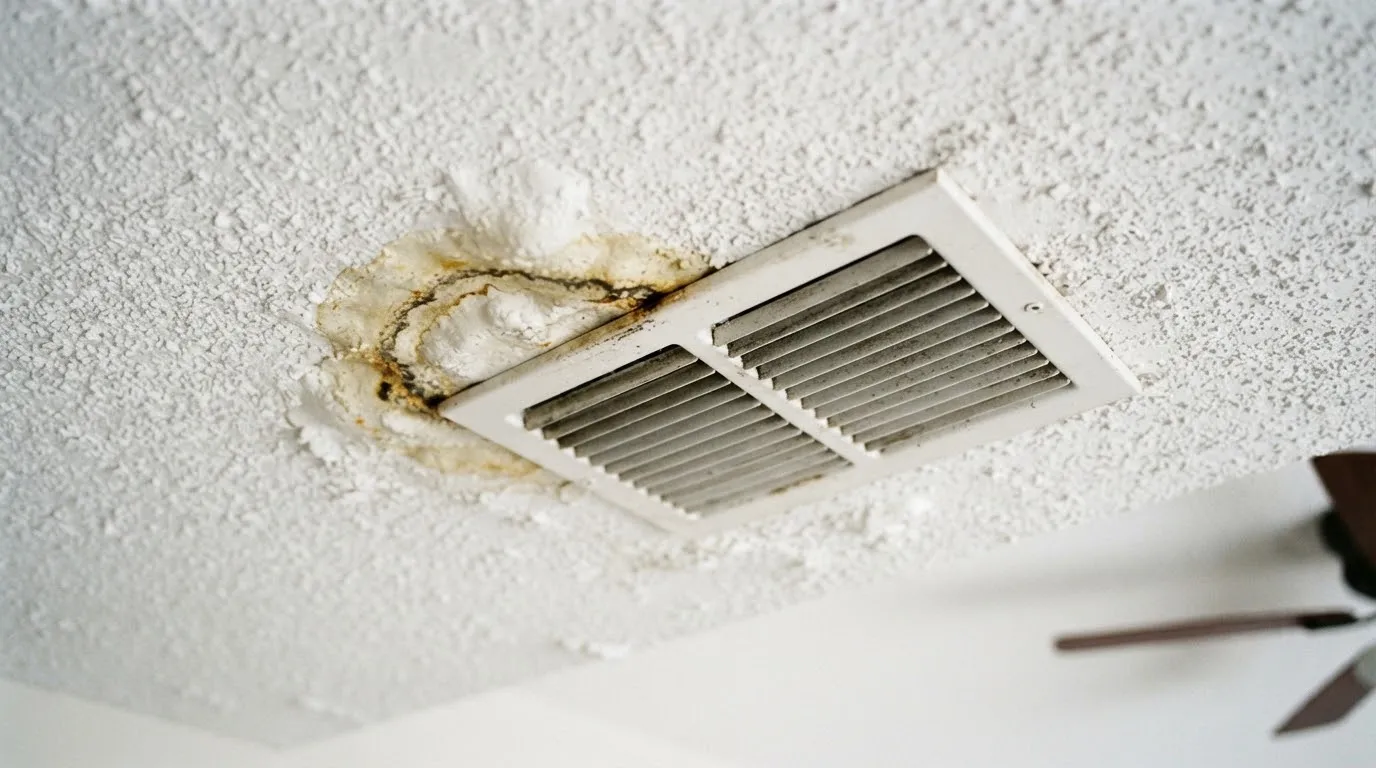 A stain alone doesn’t say whether the water came from the roof, the AC or the plumbing.
What the stain tells your roofer
Where the stain sits and when it grows point your roofer to the first places to look.
| Where it is, and when it grows | Where your roofer looks first |
|---|---|
| Only after sideways rain from one direction | Pipe boots, roof vents and the ridge vent on that side of the roof |
| Along an outside wall or in a wall-ceiling corner | Flashing where the roof meets the wall, and a gutter backing up over the fascia |
| Below a skylight, chimney or roof valley | The flashing around it, and the underlayment where water collects |
| Round or oval, near a ceiling register | The duct jacket and register boot above it in the attic, then the roof overhead |
| Hallway or closet ceiling near the air handler | The air handler’s drain pan, in the attic |
| Grows on hot, humid days, with or without rain | Condensation on the ducts or the air handler |
| Under or beside a bathroom | Where the bath fan duct ends, and its roof cap if it vents through the roof |
| Unchanged for months, edges dry and firm | An old leak, and whether the spot that caused it was ever repaired |
On the roof: the spots that leak in wind-driven rain
Building America’s guidance on flashing calls vents and other penetrations weak spots in a roof’s water control layer. FEMA’s review of Hurricane Michael found failed ridge vents let significant water into many buildings. Those are the places a stain that grows after storms usually leads back to.
Your roofer works above and uphill of the stain, checking each pipe boot for cracks, the flashing at walls and chimneys, the ridge vent, and any skylight. On a tile roof, that can mean lifting tiles to see the underlayment beneath them. Roof repair for leaks covers what those fixes usually involve.
In the attic: when the water starts inside
A supply duct carries cold air through an attic that’s hot and loaded with humidity. Anywhere the duct jacket is torn, crushed or pulled away from a register boot, that humid air hits a cold surface and water drips onto the back of the drywall. FSEC researchers, in a 2017 paper for the Florida Building Commission, noted that duct sweating is most likely from July through November, when the outdoor air is moist and the AC runs long hours.
The air handler adds its own water. It pulls moisture out of the air all summer and sends it out through a condensate line, and when that line clogs, the pan underneath fills. Standing water or rust in the pan, or an AC that shut itself off in a hot spell and came back later, points to water rising there.
Your roofer looks at the duct, the boot and the pan right above the stain on the visit. If the trail leads there instead of to the roof, you’ll know that from the same visit.
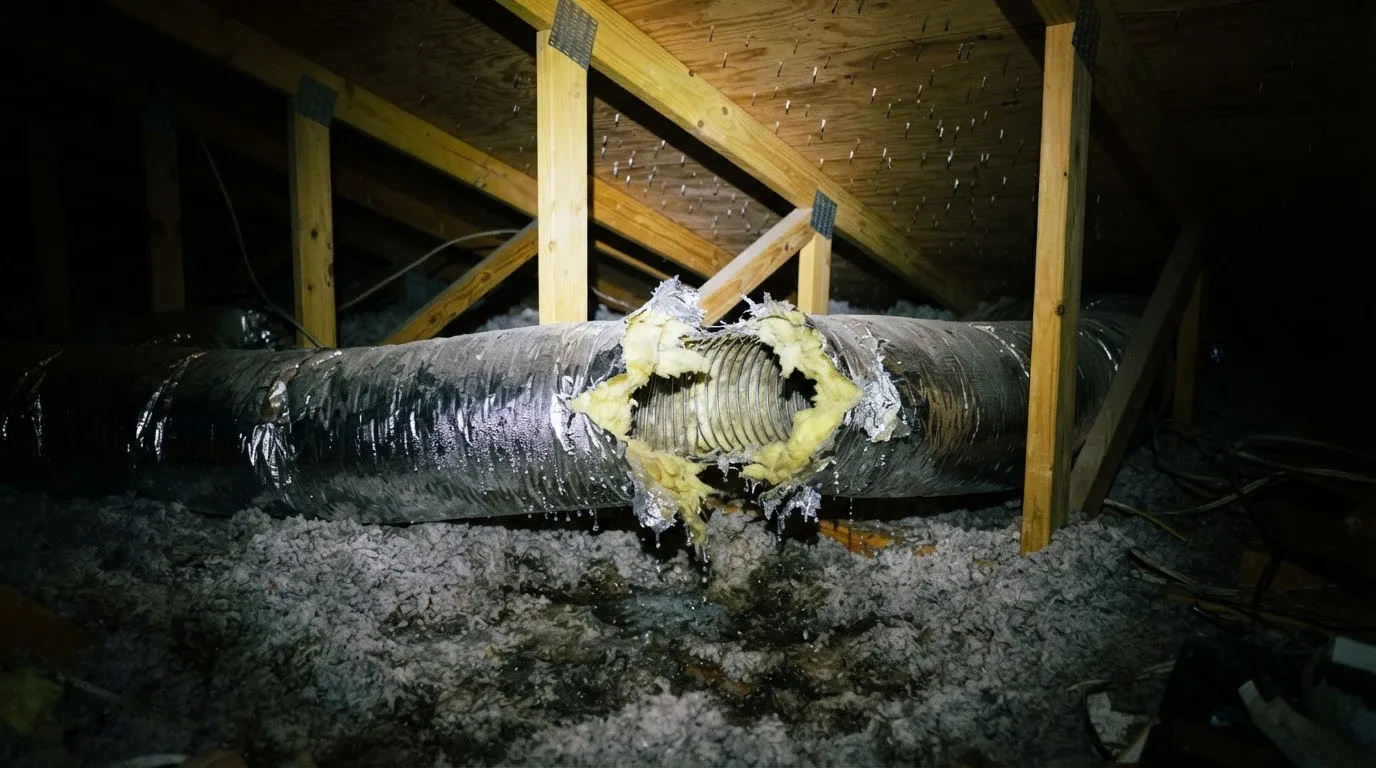 Ducts like these run through a hot attic, and a torn or loose jacket is where condensation starts.
Bath fans that end in the attic
A bath fan duct should run all the way to a cap on the roof or an outside wall. One that ends loose in the attic dumps warm, wet shower air right above the ceiling, and the stain shows up near the bathroom. Running it to a roof cap means a new roof penetration, and that needs flashing by a roofer so it doesn’t turn into the next leak.
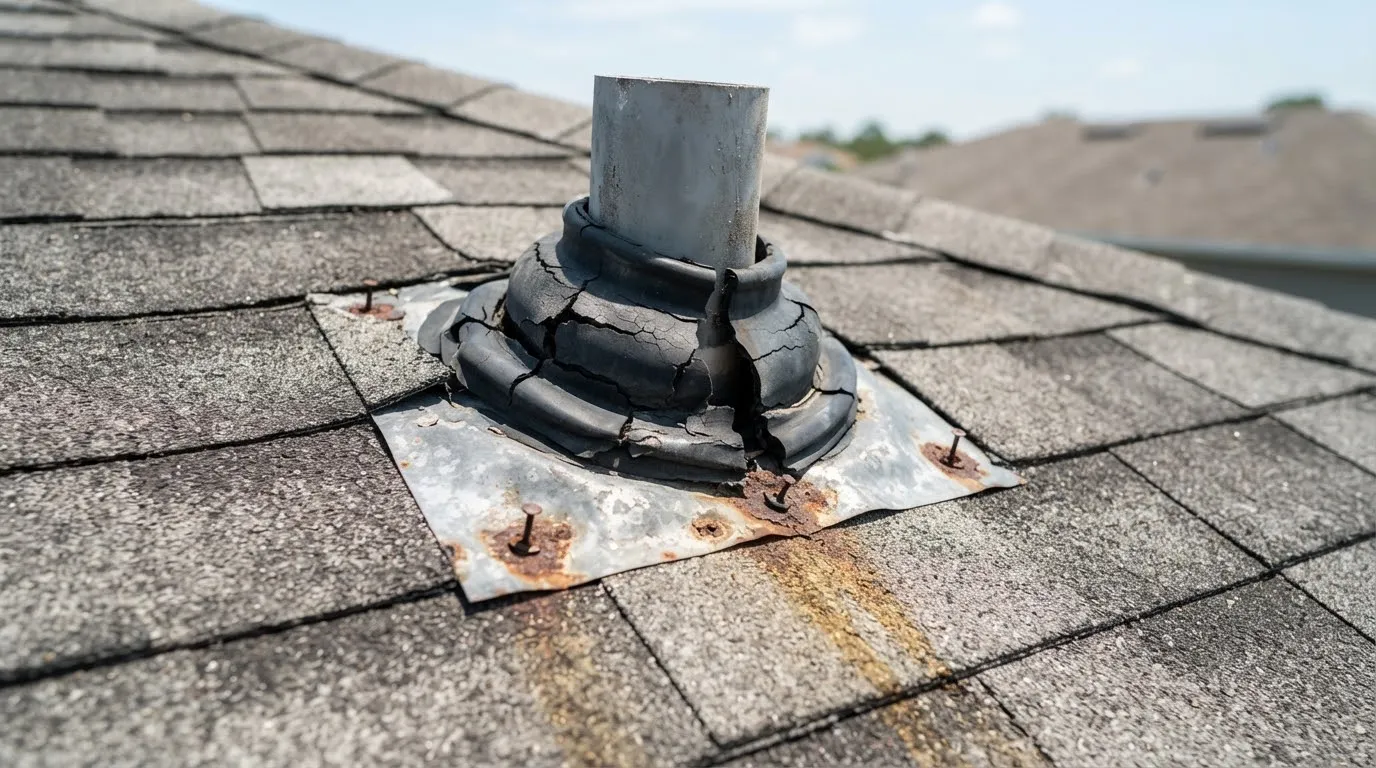 A cracked pipe boot or tired flashing is one of the roof spots to check when a stain grows after storms.
Is the leak still active?
A roofer with a moisture meter can tell on the visit. A high reading in the drywall on a dry day means water is still getting in from somewhere, and a low one on a stain with firm, dry edges points to an old leak. Either way you come away knowing whether the stain needs a repair now and where. If the roof also needs paperwork for an insurer, the right kind of roof inspection covers that.