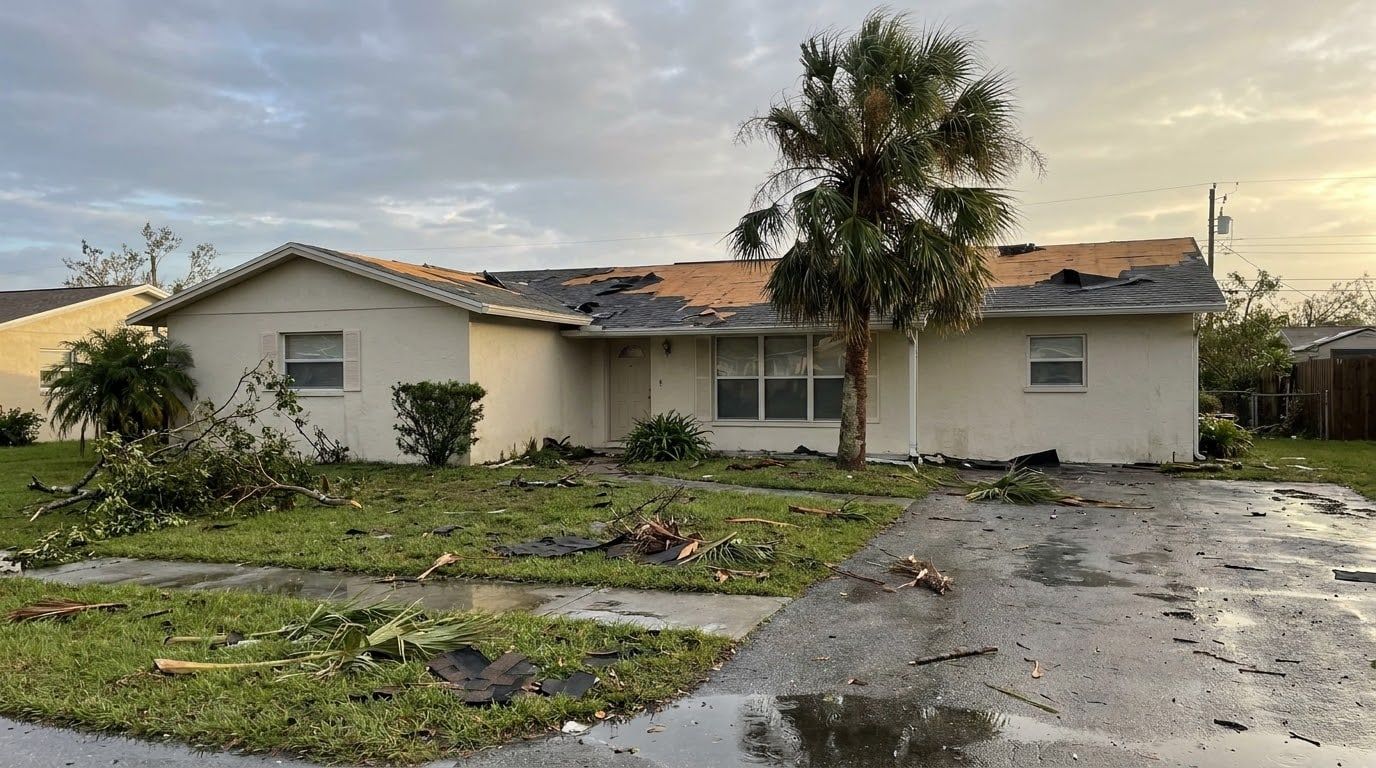
A storm roof can look fine from the street
Wind lifts shingle edges and breaks the sealant strip that holds them down, and a shingle that has come unsealed can lie flat again and look normal from the road until the next blow takes it. That’s why storm damage roof repair starts with a close look, not a glance. Roofing Services Tampa covers storm damage across Tampa Bay and Hillsborough County: tell us what came through and what you can see, and we’ll get a licensed, insured roofer out to go over the roof slope by slope and fix what the storm broke.
NRCA recommends inspecting every roof that went through severe weather, whatever it looks like from below, and says owners should do their own looking from ground level only.
What you might spot from the yard
A slow walk around the house turns up most of what’s worth mentioning on the call:
- shingles or tile pieces on the ground, and the lighter or bare patch on the roof where they came from
- tabs that are lifted, flipped back or hanging at an angle
- limbs on the roof or leaning against it (leave them where they are)
- dents in gutters, downspouts, roof vents and the AC unit
- piles of granules where the downspouts empty (what granules in the gutters mean)
Inside, a new stain in a closet or along an exterior wall counts too. If the roof was already patched or stained before the storm, tell us, so the write-up separates old damage from new.
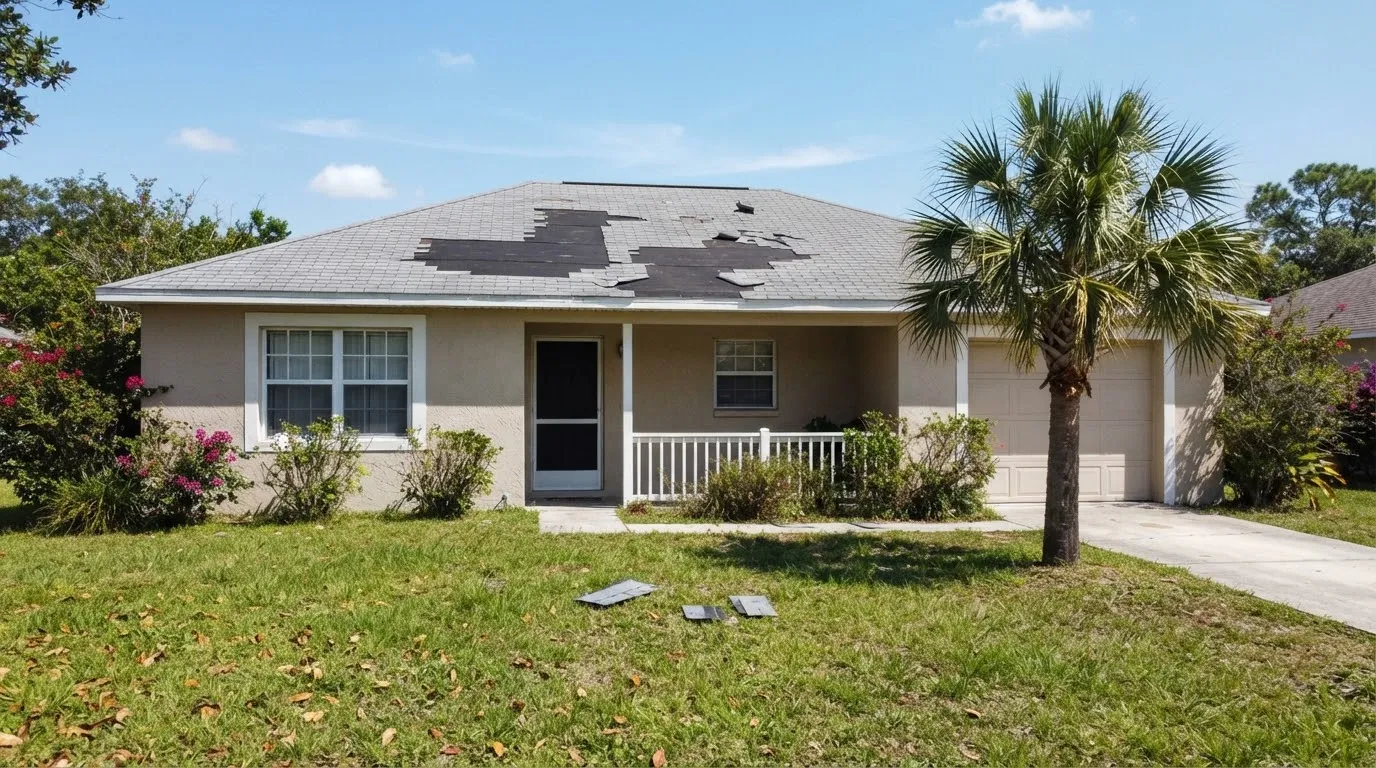 Missing patches like these are easy to spot from the yard; tell us what you see when you call.
Wind damage or hail damage?
The two leave different marks on a roof, and the write-up has to say which caused what.
| What turns up | Usually points to | What your roofer does about it |
|---|---|---|
| Shingles or tile in the yard, bare spots on the slope | Wind | Photographs where pieces landed and where they came off |
| Tabs lifted but still attached | Wind; the sealant strip let go | Checks whether the shingles around them are still bonded |
| Dents in gutters, vents, AC fins; clean spatter marks | Hail | Photographs each one next to a tape measure |
| Granules piled at downspouts after the storm | Hail, or ordinary aging | Looks at the shingles above for bruising or bare spots |
| A limb through or on the roof | Tree fall | Gets the opening covered before the limb damage is repaired |
| A new ceiling stain after wind-driven rain | Water getting past a damaged or weak spot | Traces it from the attic to the spot on the roof |
What hail does to shingles
Research by Haag, published in NRCA’s Professional Roofing magazine, puts the threshold for functional damage to asphalt shingles at hailstones about 1 inch across or larger. Functional damage means a fractured mat, a puncture or a tear: damage that lets water in or shortens the shingle’s life. Granule loss by itself, on shingles in good condition, doesn’t count. Hail also falls in random patterns, so real hail marks are scattered across a slope rather than lined up.
Hail that size isn’t only a hurricane-season problem here. Around central Florida, inch-plus hail turns up most often from May through July, so a spring thunderstorm can do it too.
What wind does
Once the sealant strip lets go, a shingle can crease, tear or blow off. FEMA’s advisory after Hurricane Michael named unsealed and partly unsealed shingles as a source of failures, and it reported widespread poor shingle performance on homes built after the first Florida Building Code took effect in 2002. So your roofer checks whether the tabs are still sealed down on every slope, including the ones that look intact.
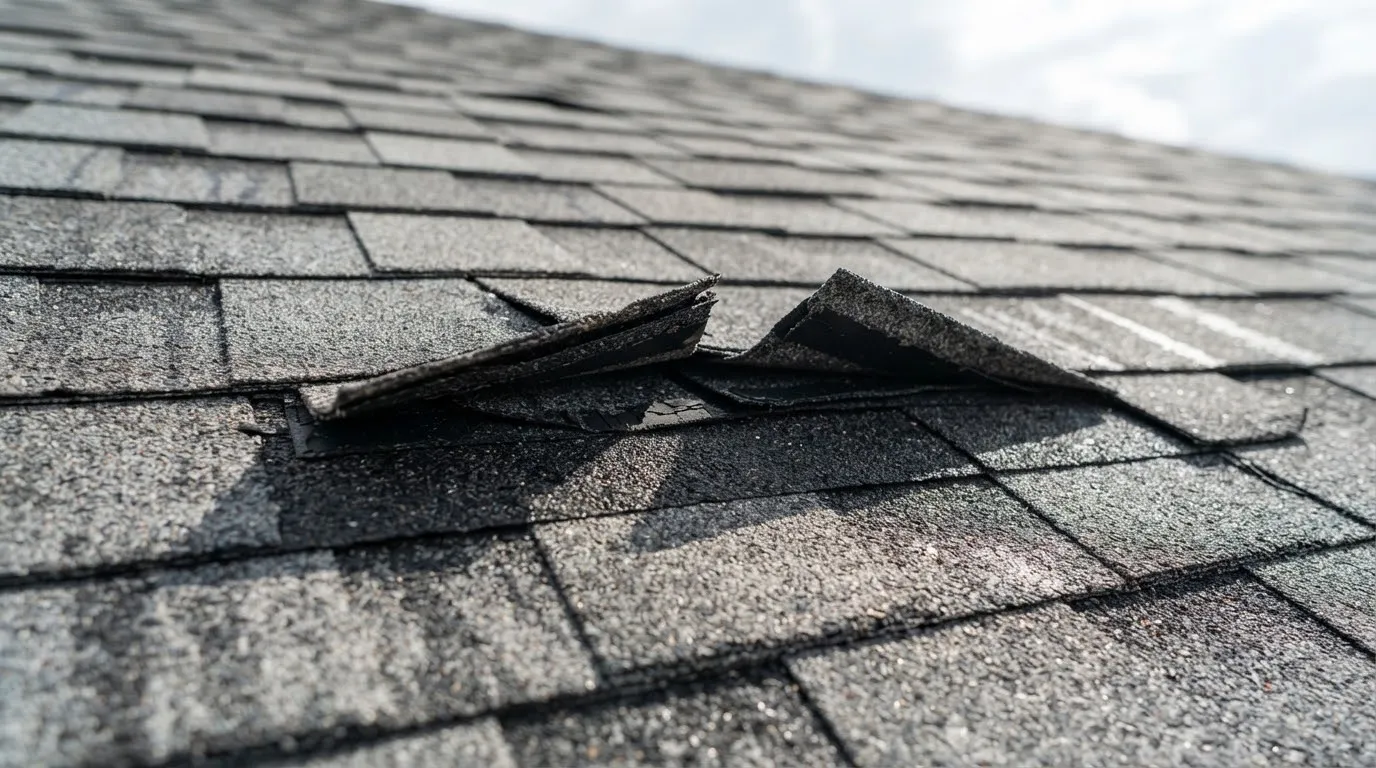 Once the sealant strip lets go, a shingle can crease, tear or blow off.
What the damage write-up covers
Ask for the write-up to include photos of every slope, close-ups of the damage with a scale in the frame, the roof’s measurements and an itemized price, all dated. The price should say whether it covers a repair, a section or the whole roof, and why. Storm claims have to be reported to your insurer, and a dated report like this is what that report leans on; roof insurance claims and how depreciation works go further.
On an older roof, the share that’s damaged can change the job. If the damage covers a big share of a roof installed before the 2007 Florida Building Code took effect, the 25% rule can turn a repair into a full replacement. The repair or replace guide walks through how that rule reads now.
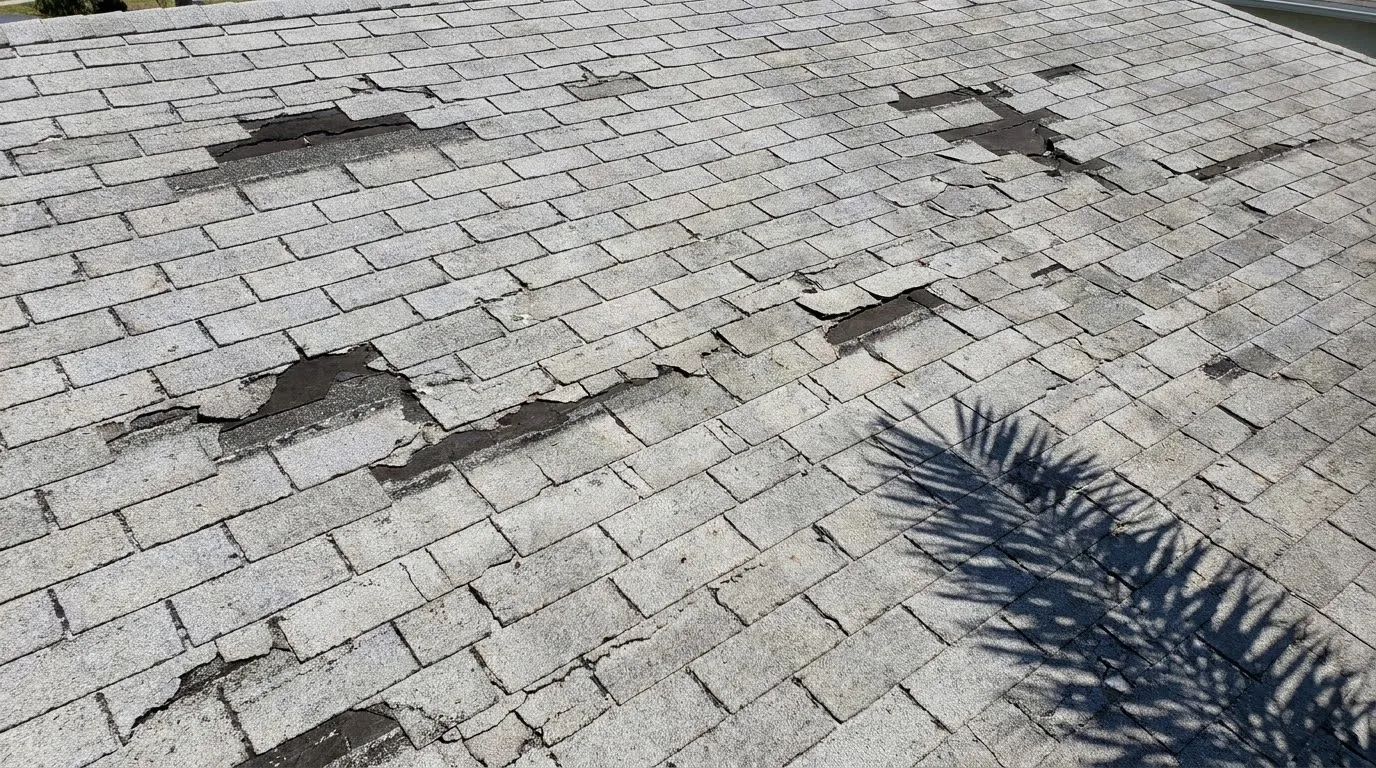 On an older roof, how much of it the storm damaged can turn a repair into a replacement.
Getting the roof put back together
Missing shingles get replaced and the ones around them sealed down, torn flashing gets redone, and broken tile gets swapped and its underlayment checked. Where a limb went through, the damaged decking gets replaced before the roofing goes back on. If water is coming in while you wait, emergency roof repair covers the tarp. You’ll see the written price first, and you only pay for work you agreed to.