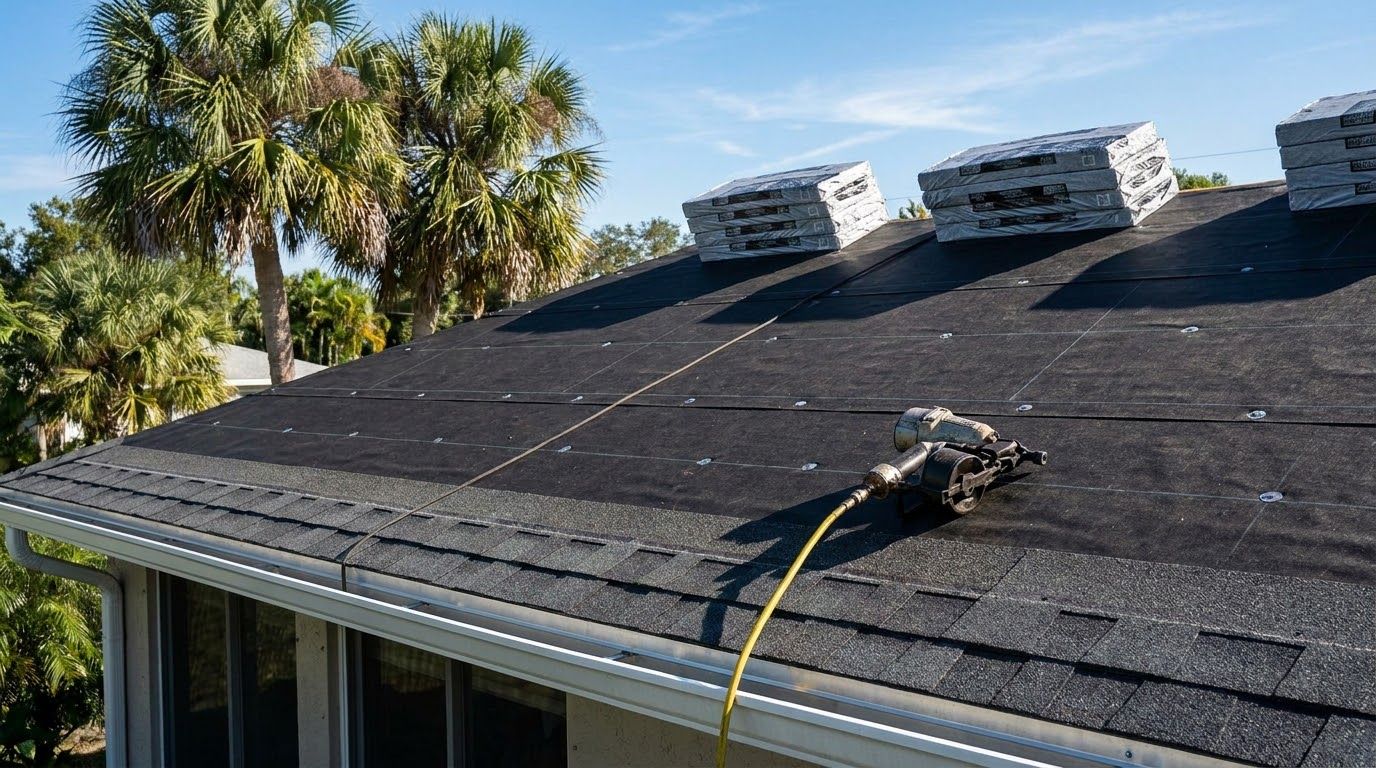
What a smooth roof job looks like
A roof job goes smoothly when the written price spells out the tear-off, the decking, the underlayment and the permit before anything starts. Roofing Services Tampa handles re-roofs and roof repairs for homes across Hillsborough County and the Polk ZIPs next to it, and the questions below are the ones worth settling on the call and on the visit, in plain answers.
Every roofer we get out to your house is licensed and insured; what a Florida roofing license means explains what that covers for you.
Will my roofer check the attic?
Ask for it. Stains and soft spots on the underside of the decking show up from the attic, not from the yard, so a price written after an attic look is a lot closer to the real job than one written from the driveway. It also tells your roofer how many sheets of decking might need replacing once the old roof comes off.
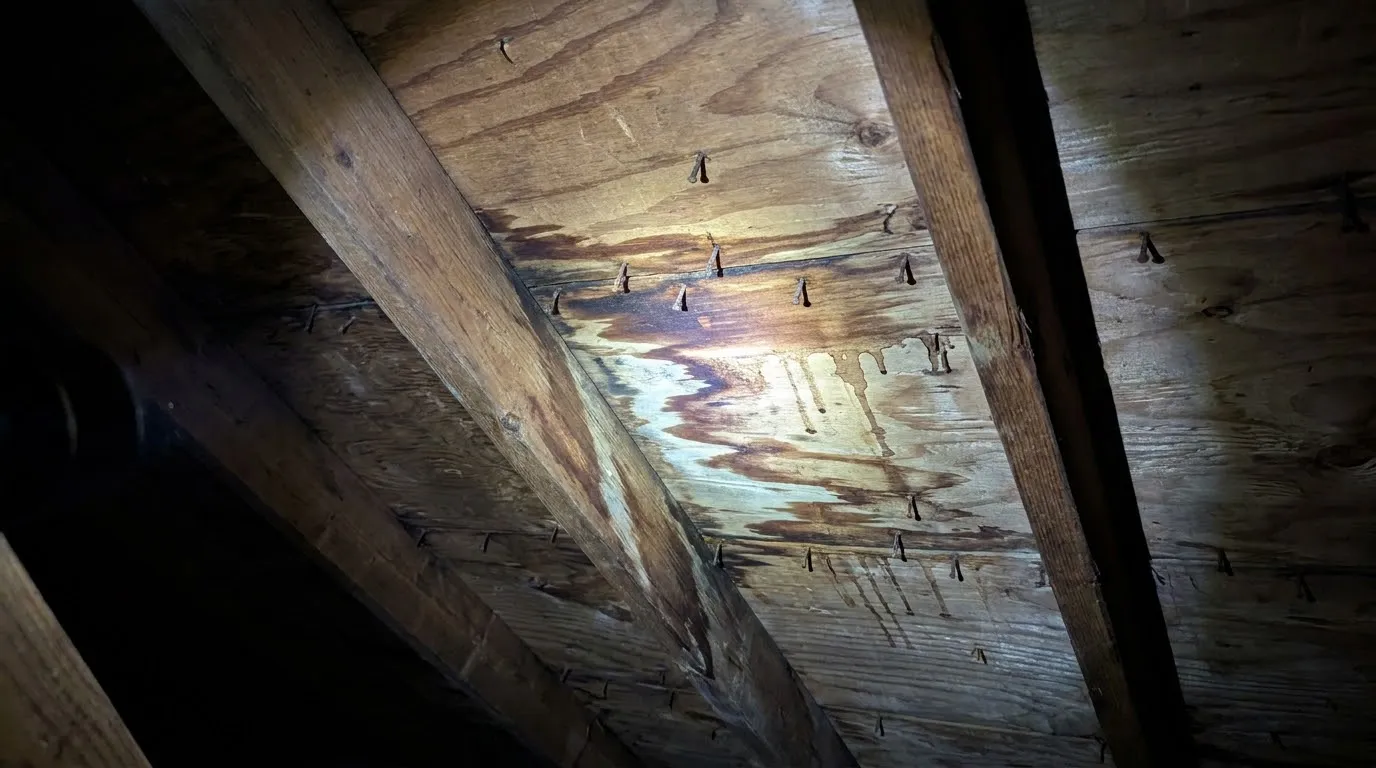 Soft spots and stains on the underside of the decking only show from the attic.
What’s in the written price?
Each part of the job gets its own line, so you can see what you’re agreeing to:
| Line | What it says |
|---|---|
| Tear-off | Every existing layer comes off and gets hauled away, with disposal included |
| Decking | A price per sheet of plywood or OSB, and how many sheets are included |
| Deck nailing and secondary water barrier | Named for a house built before the Florida Building Code; what a full re-roof involves explains these upgrades |
| Underlayment | The actual product, not “underlayment per code” |
| Product approval numbers | The Florida Product Approval or Miami-Dade NOA numbers for the roof covering and the underlayment |
| Permit | Pulled under your roofer’s license, and whether the fee is included |
| Warranty | Workmanship and manufacturer, each with its length |
| Start date | A target date and how long the job runs |
You only pay for work you agreed to, and the written price is where that agreement lives. On a job tied to an insurance claim, Florida’s roofing law requires an itemized estimate before any repair authorization gets signed. How approved products get picked for your house is covered under new roof installation.
How is rotten decking priced?
By the sheet. Nobody can see how much of the deck is rotten until the old roof is off, so the written price carries a per-sheet number instead of a guess at the total. When rotten wood turns up, ask for photos and a sheet count before the new sheets go down. You’ll see exactly what got replaced and why.
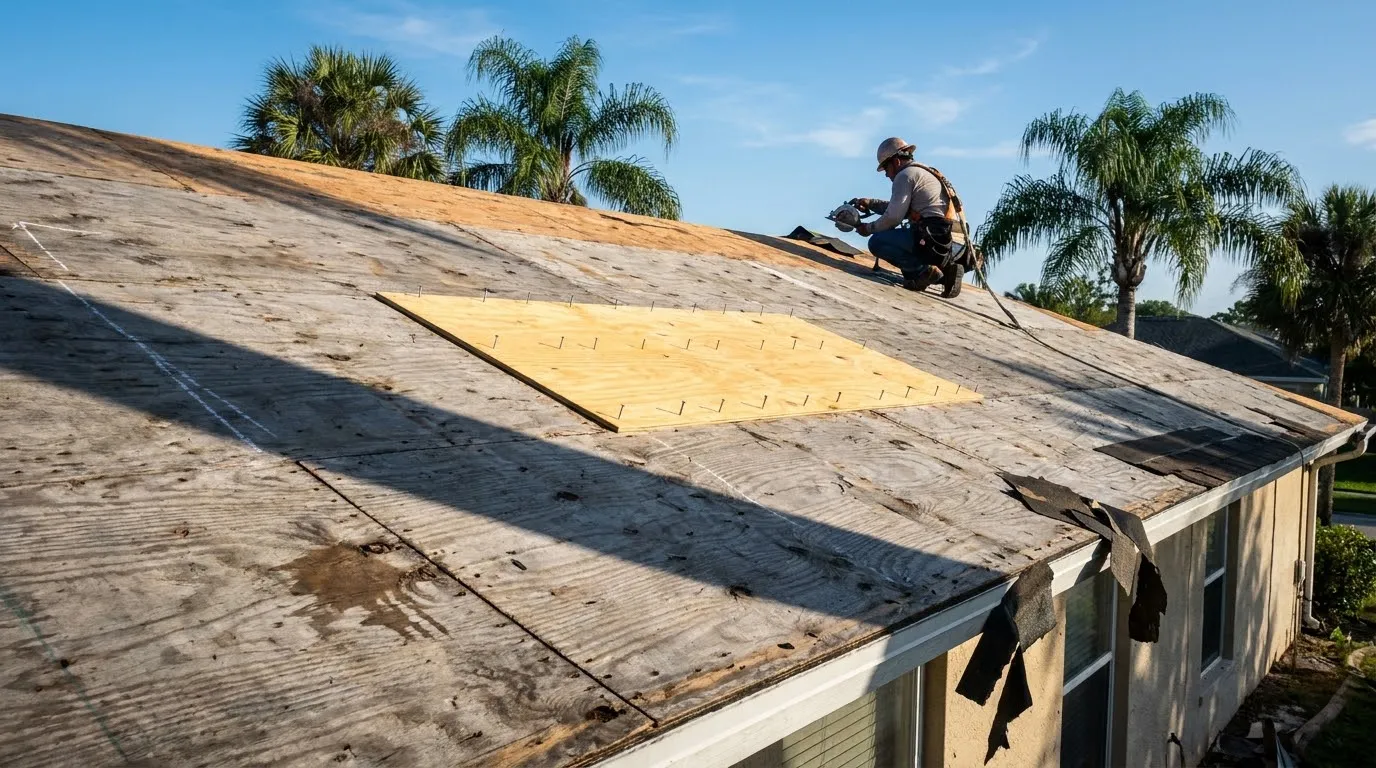 A roof stripped to the deck is where the per-sheet price in your contract gets used.
Who pulls the permit, and what gets inspected?
Your roofer does. A re-roof needs a permit in Hillsborough and Polk, and the contractor’s license number goes on the application. On jobs over $5,000 a Notice of Commencement has to be recorded before the first inspection. Which inspections your building office runs, and when, is on the roof permit page.
How long does the job take?
The target start date and how long the job runs both go on the written price. What moves them is the size of the roof in squares, how many layers come off, how much decking turns up rotten, and how soon the inspections can be booked. Weather matters too; an afternoon storm can stop a tear-off for the day.
What happens if it rains with the roof open?
Ask your roofer how much roof comes off at once on your house, and how the open section gets covered overnight and when an afternoon storm rolls in. What you want is a deck that stays dry until the underlayment is down.
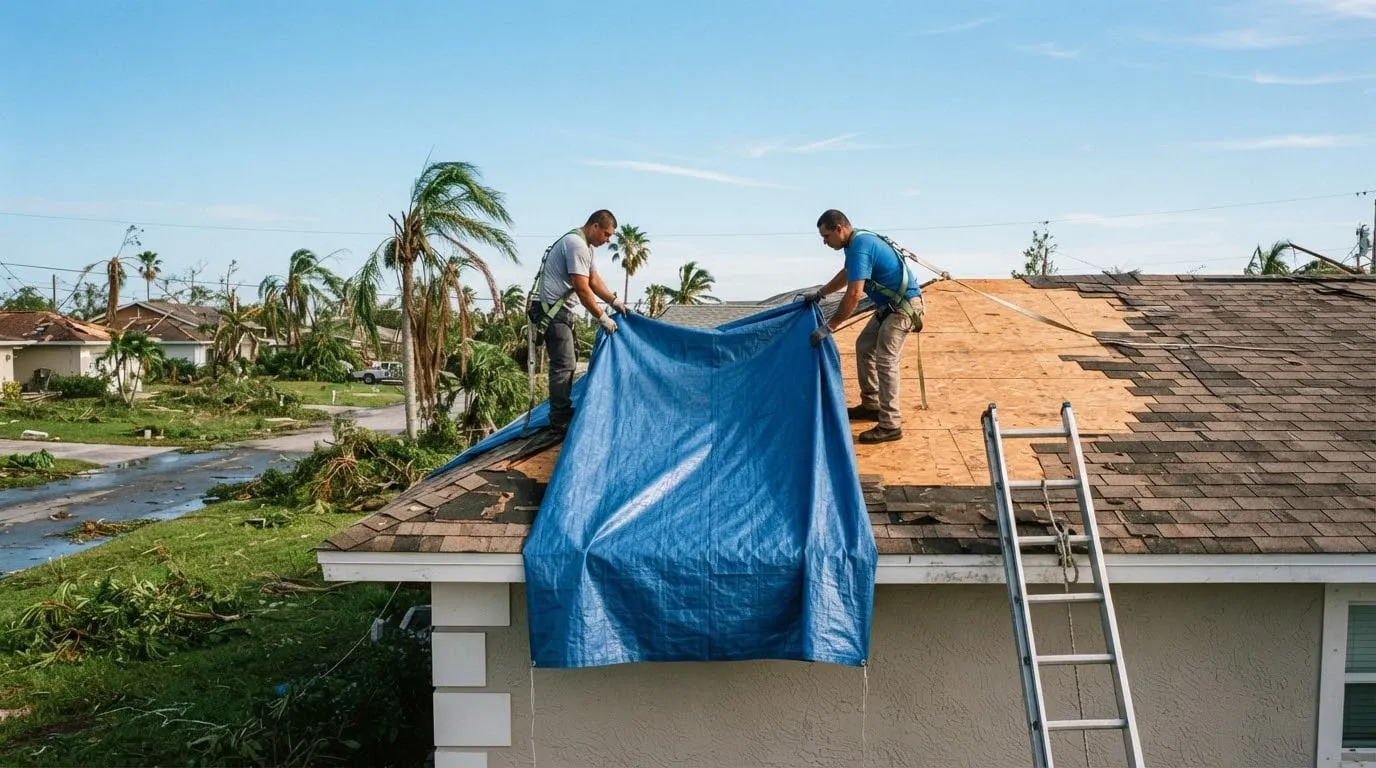 How the open section gets covered when an afternoon storm rolls in is worth asking about.
Can the job help with my insurance later?
It can. A wind mitigation inspection after the new roof is on can earn a discount on the wind part of your insurance, and the form asks for a photo or document backing up each roof feature it records. Deck nailing and the secondary water barrier disappear once the shingles go on, so ask your roofer to photograph them during the job.