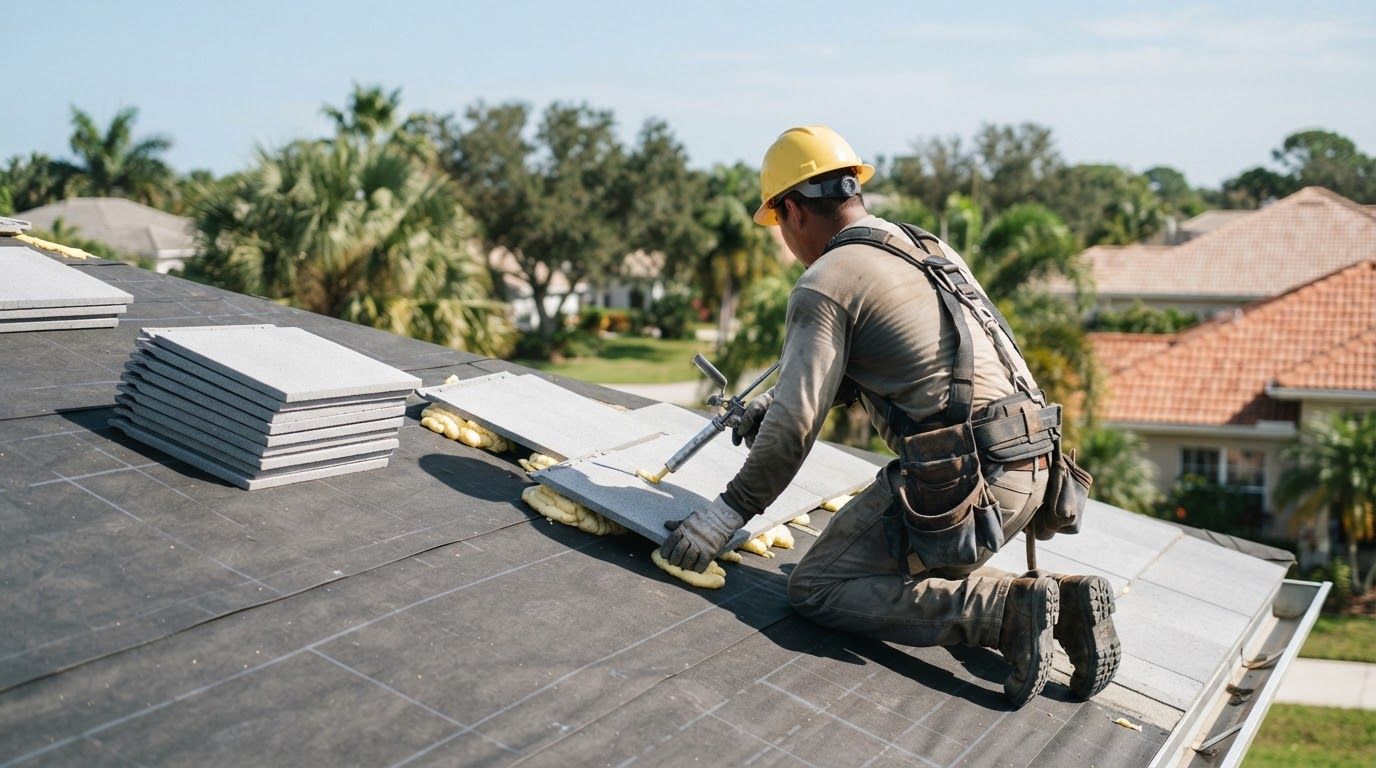
Why a re-roof needs a permit
Every building office around here puts re-roofs on its permit list: the City of Tampa, Hillsborough County, Plant City, Lakeland, Mulberry and Polk County. The permit is how the code gets checked on your roof. An inspector looks at the deck attachment, the underlayment and the finished roof covering, at the points where those can still be seen.
Licensed, insured roofers for re-roofs and roof repairs across Hillsborough County, south Lakeland and Mulberry. Call Roofing Services Tampa with the address and what the roof needs, and we’ll get one out to look at it. The permit, the inspections and the paperwork that goes with them come with the job.
Who issues the roof permit for your address
City limits decide it, not the mailing address. Inside the City of Tampa, Temple Terrace, Plant City, Lakeland or Mulberry, the city’s building department issues the roof permit. Everywhere else in Hillsborough County it’s the County’s Development Services, and in the unincorporated parts of the two Polk ZIPs it’s Polk County.
That trips up a lot of people. Brandon, Riverview, Valrico and Seffner are unincorporated, so a re-roof there goes through the County. So do plenty of houses with a Tampa address in Town ‘n’ Country, Carrollwood or Northdale, and plenty with a Plant City or Lakeland address outside those cities. You don’t have to sort it out first: your roofer files with whichever office covers your street.
Small repairs and the $7,500 exemption
Some small jobs skip the permit, and each office draws the line in its own place. The City of Tampa exempts a new covering, recover, re-roof or repair of 500 square feet or less. Lakeland exempts minor shingle repair under 25 square feet total. Polk County exempts minor repairs under 25% of the roof, as judged by its building official.
A state law that took effect July 1, 2026 adds an exemption for work valued under $7,500 on a single-family home. It doesn’t apply in a flood hazard area, to structural work, or to a job split up to get under the line, and it takes a written exemption request filed with the contract or scope. Hillsborough County lists non-structural roof repair or replacement as work that may qualify, through an exemption application in HillsGovHub.
A repair that keeps growing can also change which code the whole roof has to meet; that’s the 25% rule for older roofs.
What gets inspected, and when
City of Tampa
The city requires a mid-job BLD-Roof Dry In inspection on every tile roof. On shingle and other non-tile roofs, the contractor can upload a roof mitigation statement or attestation instead. Every job ends with a ROF-Final. Residential roofing inspections in the city are virtual only, through the Vu-Spex app, so the inspector judges the job from photos and video. Your roofer documents the dry-in before it gets covered.
Unincorporated Hillsborough County
At application, your roofer accepts an attestation that the decking, underlayment and roof covering will meet the Florida Building Code. Partway through, the County runs a Progress Check to confirm the roof deck attachment was strengthened as the code requires. It can happen on site or virtually, from photos and video, and a Roof Mitigation Verification Statement uploaded to HillsGovHub can stand in for that visit. Then comes a final roof inspection.
Lakeland, Mulberry and Polk County
A Lakeland application has to list product approval numbers for both the roof covering and the underlayment, and include a structural integrity letter signed by the contractor, an engineer or the owner-builder. Mulberry lists a Re-Roof Affidavit among the forms for a permit. Unincorporated Polk adds an in-progress inspection on the day of the work and a notarized affidavit at the final; more on that is on the south Lakeland page about Polk County roof inspections.
In a historic district, a Certificate of Appropriateness can be needed before the permit. The City of Tampa rules are on the Tampa page with the historic districts, and Plant City’s historic district rules reach even roof repairs.
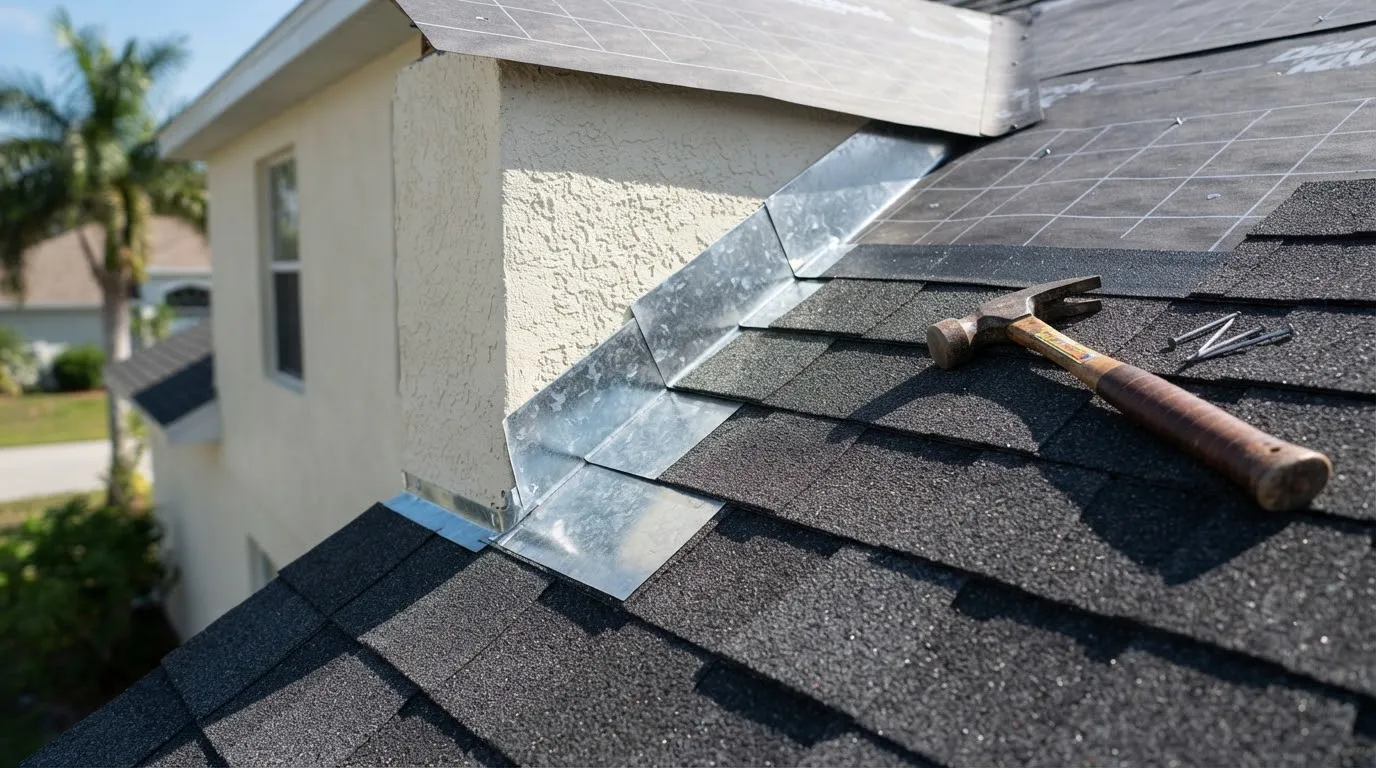 Underlayment and flashing get documented or inspected before the roof covering hides them.
The Notice of Commencement on bigger jobs
When the contract is over $5,000, the permit office needs a copy of a recorded Notice of Commencement before the first inspection. It’s the lien-law notice that a job is starting, recorded with the county clerk and posted at the job. The notice is void if work doesn’t start within 90 days of recording, and it runs out a year after recording unless it states a different date, so it gets recorded close to the start date.
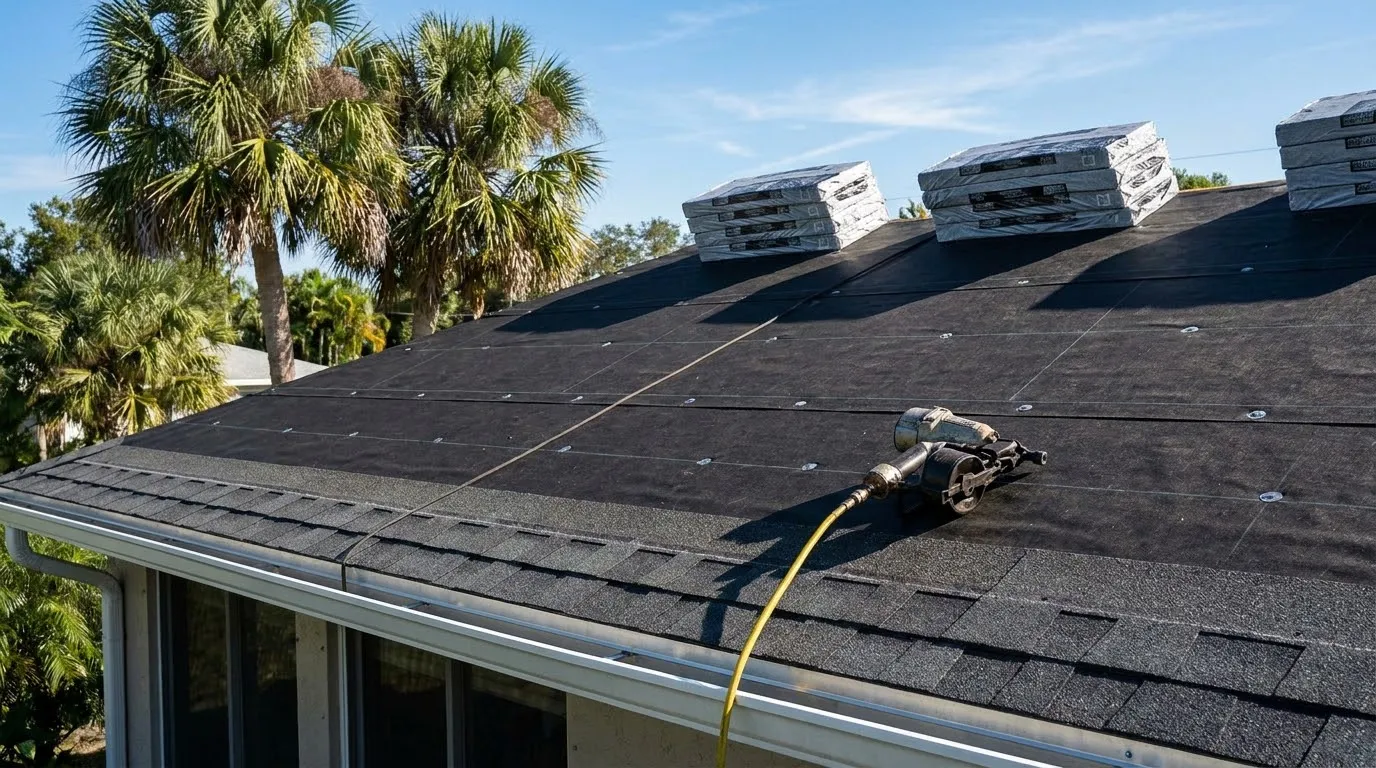 On a job over $5,000, the recorded Notice of Commencement goes in before the first inspection.
Who pulls the permit
Your roofer does. Florida requires the contractor’s license number on the permit application, and the County has the contractor accept the code attestation, so the permit is how the license gets tied to your job. The roofer we send out holds a Florida license, and that number is the one on your permit. What a Florida roofing license covers explains certified and registered contractors.
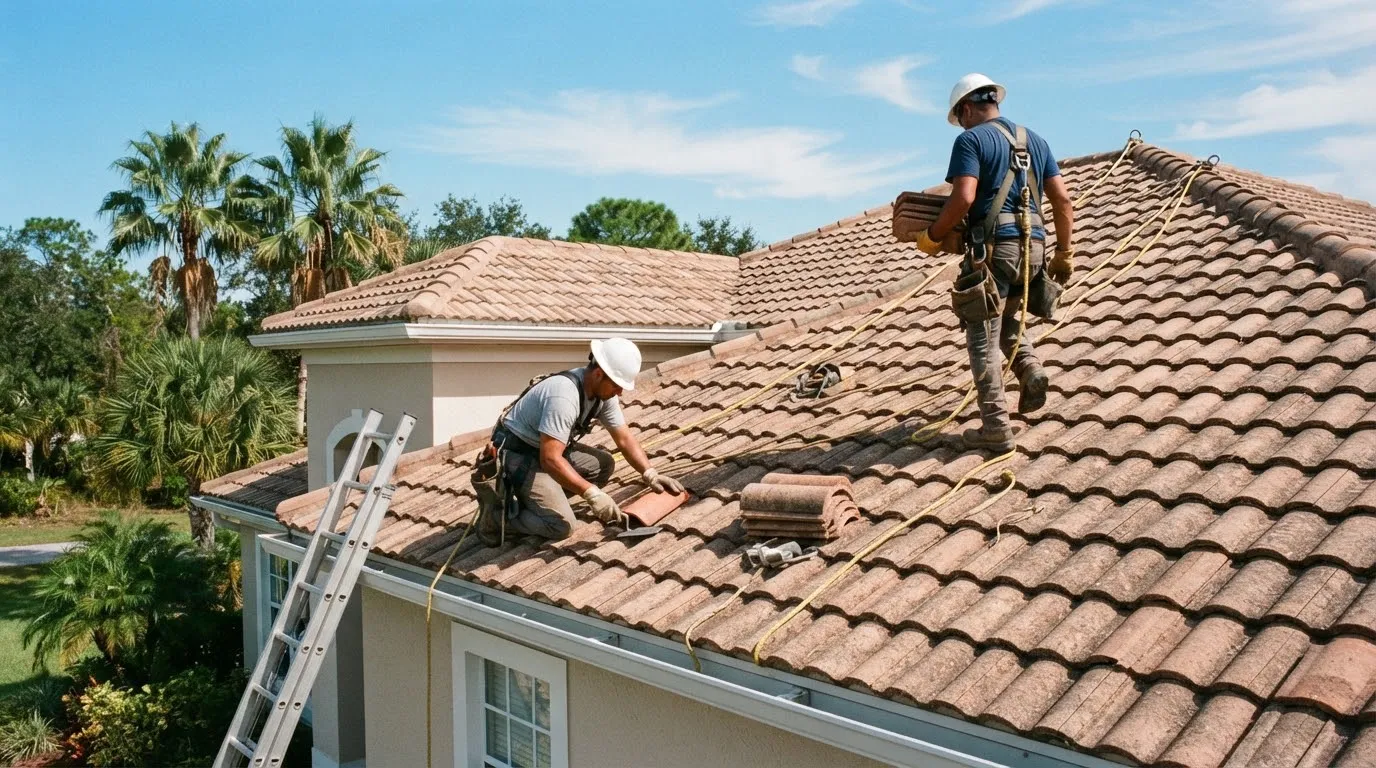 The roofer’s license number goes on the permit application, which ties the license to the job.
Why the permit record matters later
Insurers count roof age from the last time the whole roof was replaced to code, and a re-roof permit with a passed final inspection is the usual proof of that date. It’s what the roof-age questions on roof certification for insurance start from, and a buyer may go looking for it when the house sells. A permitted re-roof gives your new roof a date nobody has to guess at.