What a roofing license does for your roof job
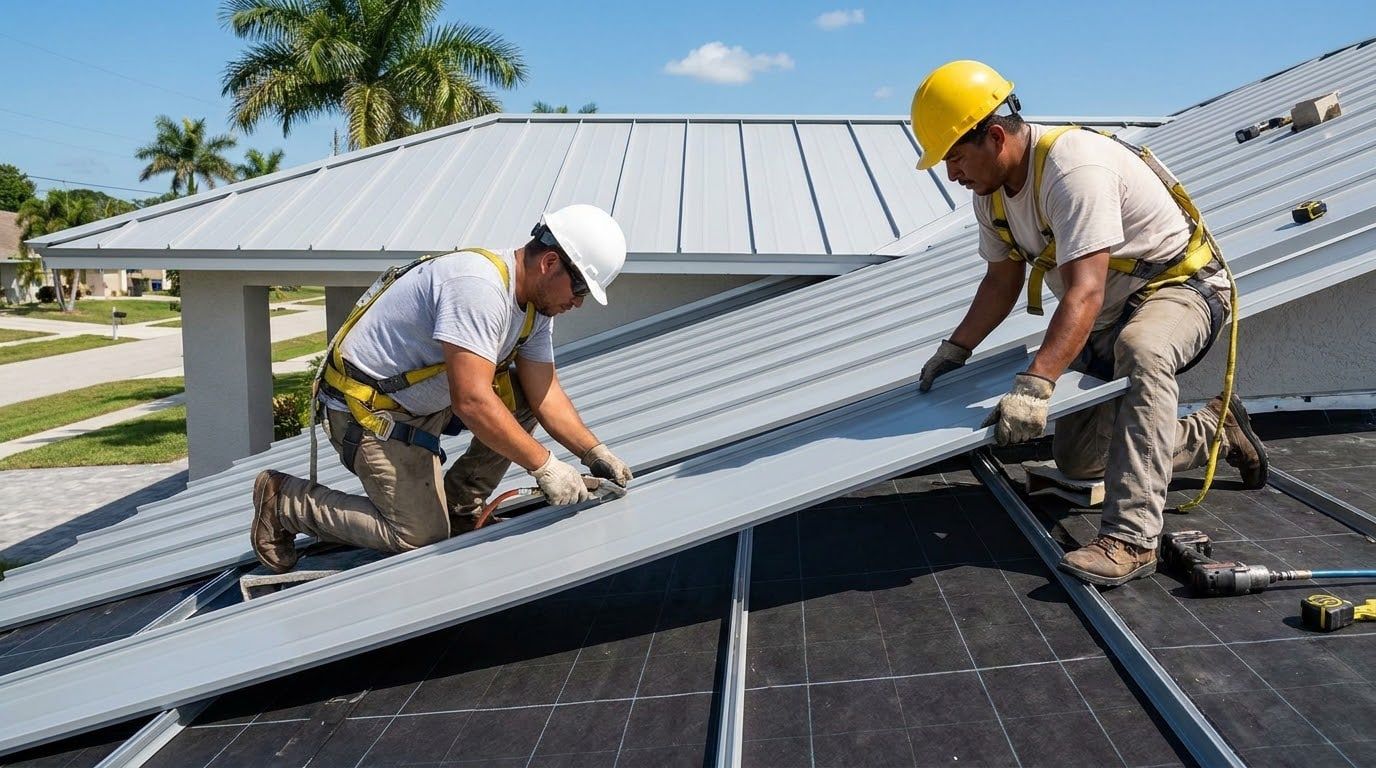
A Florida roofing license is the state’s go-ahead to contract for roof work: tear-offs, re-roofs, leak repairs, decking and flashing. Roofing Services Tampa handles roof calls for homes across Hillsborough County and the south Lakeland and Mulberry ZIPs, and every roofer we get out to your house holds that license and carries insurance.
For you, the license matters in three places. It lets your roofer sign the contract for the job. It puts the permit under a contractor’s license number instead of your name. And it ties the work to a license the state can act on if something goes wrong with it.
Certified or registered: two kinds of roofing license
Florida licenses roofers in two ways, and the state files them under two codes.
A certified roofing contractor (license code CC) holds a state certificate of competency and can contract for roofing anywhere in Florida. A registered roofing contractor (code RC) met a local government’s competency requirements, registered that with the state, and contracts in those jurisdictions.
Both are full roofing licenses where they apply. It comes up around here because a short drive crosses a lot of permit lines: the City of Tampa, unincorporated Hillsborough County, Plant City, Temple Terrace, Lakeland, Mulberry and unincorporated Polk County. The roofer who comes out to your house is licensed for roof work at your address, whichever office issues the permit there.
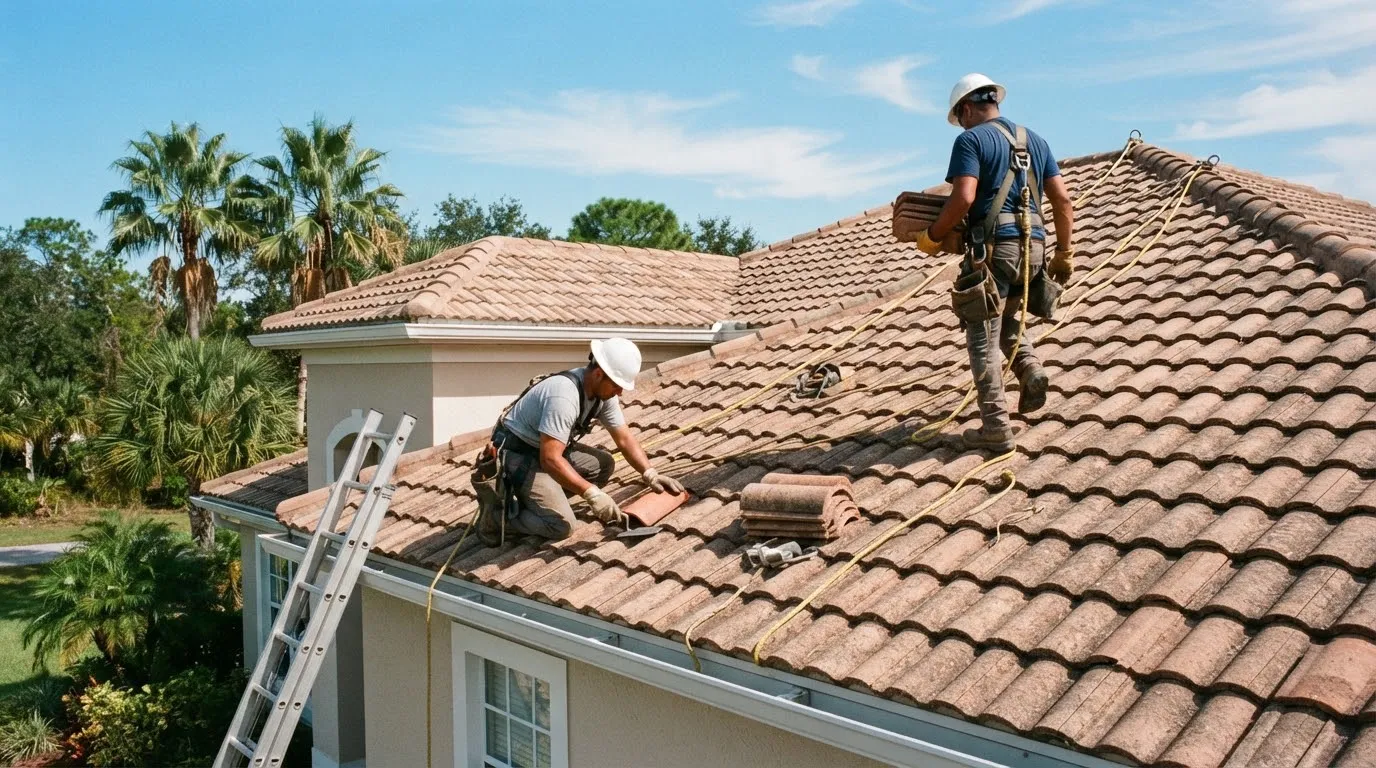 A registered roofer’s license covers only the places it’s registered, so ask where before the crew goes up.
What the insurance covers
Roofing puts people on ladders and on pitched decks over your house, so the insurance matters as much as the license. General liability coverage is there for damage to your house or property during the job. Workers’ compensation is there for anyone who gets hurt working on your roof.
That’s why the coverage sits with the roofer. With a licensed, insured roofer on the job, an injury on the roof or damage to the house during the work falls under your roofer’s coverage.
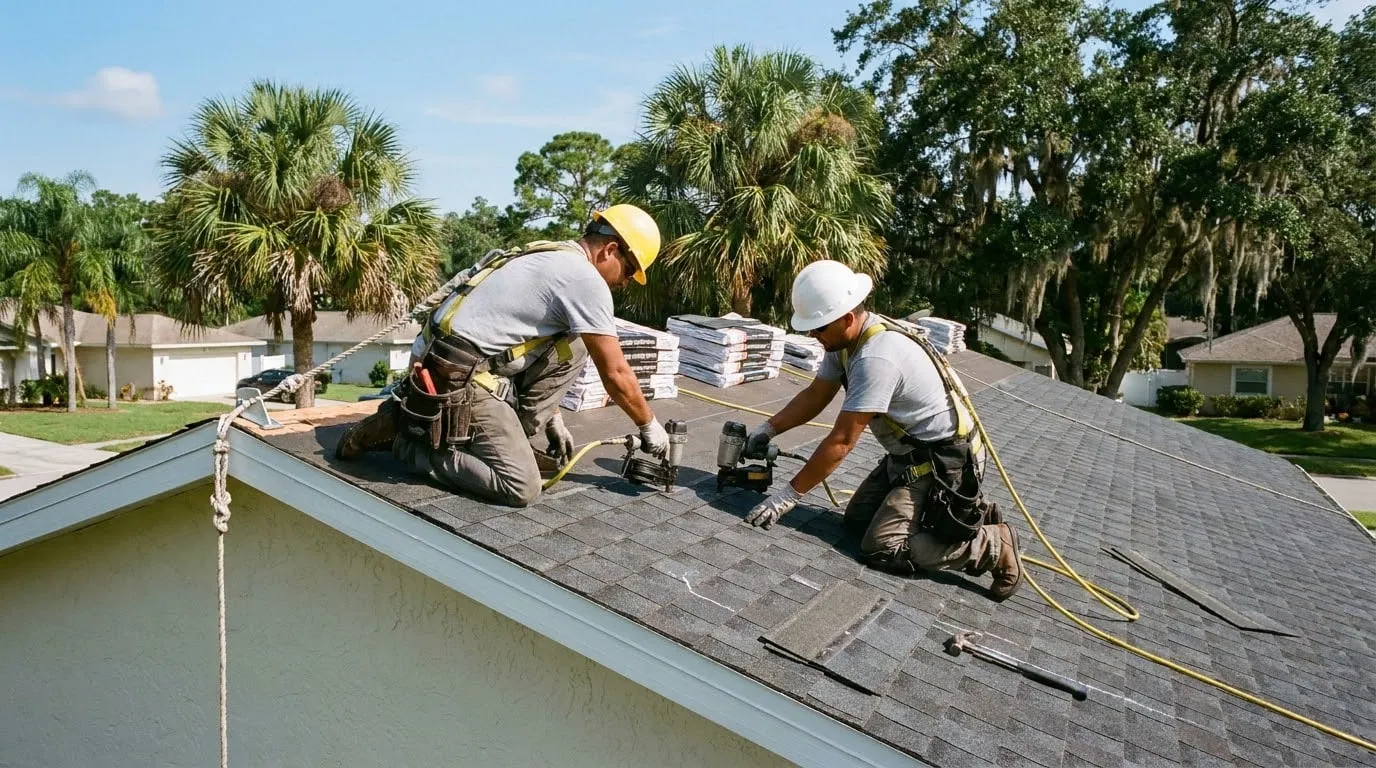 A licensed, insured roofer carries the coverage for the crew working on your roof.
Your roofer pulls the permit
A re-roof in Hillsborough or Polk needs a permit, and a contractor’s license number goes on the application. With a licensed roofer on the job, the permit goes in under that license, and your roofer books the inspections the building office requires. The details are on the roof permit page.
Florida does let you pull a permit yourself as an owner-builder on a home you live in. The building department hands over a disclosure statement first, and it spells out what that means: you become the responsible party of record, you may be liable for injuries to the workers, and you have to carry workers’ comp and withhold taxes for anyone you employ. Having the permit under your roofer’s license keeps all of that off your plate.
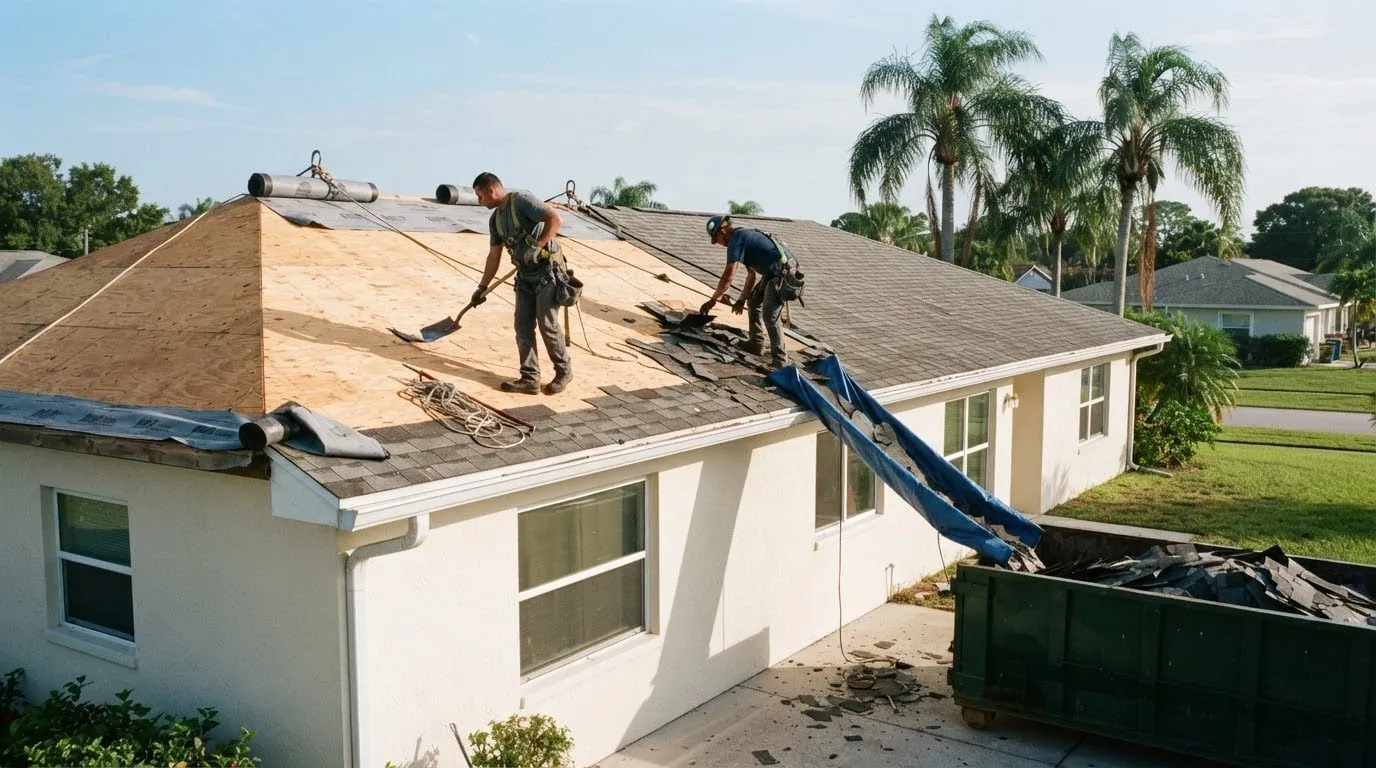 On a permitted roof job, your roofer is the contractor of record, not you.
Licensed roofers after a storm
Storm season is when the license and the insurance count most. Roofs get opened up in a hurry, tarps go on, and insurance paperwork follows. A licensed roofer can sign the roof-age inspection insurers ask for on older roofs, and the repair goes in under a permit when the job needs one.
The storm damage roof repair page covers how a storm job runs, from the tarp to the finished roof. If you’ve got questions about the job itself, from decking to rain on an open roof, questions homeowners ask before a roof job answers them.